How a line break shows up
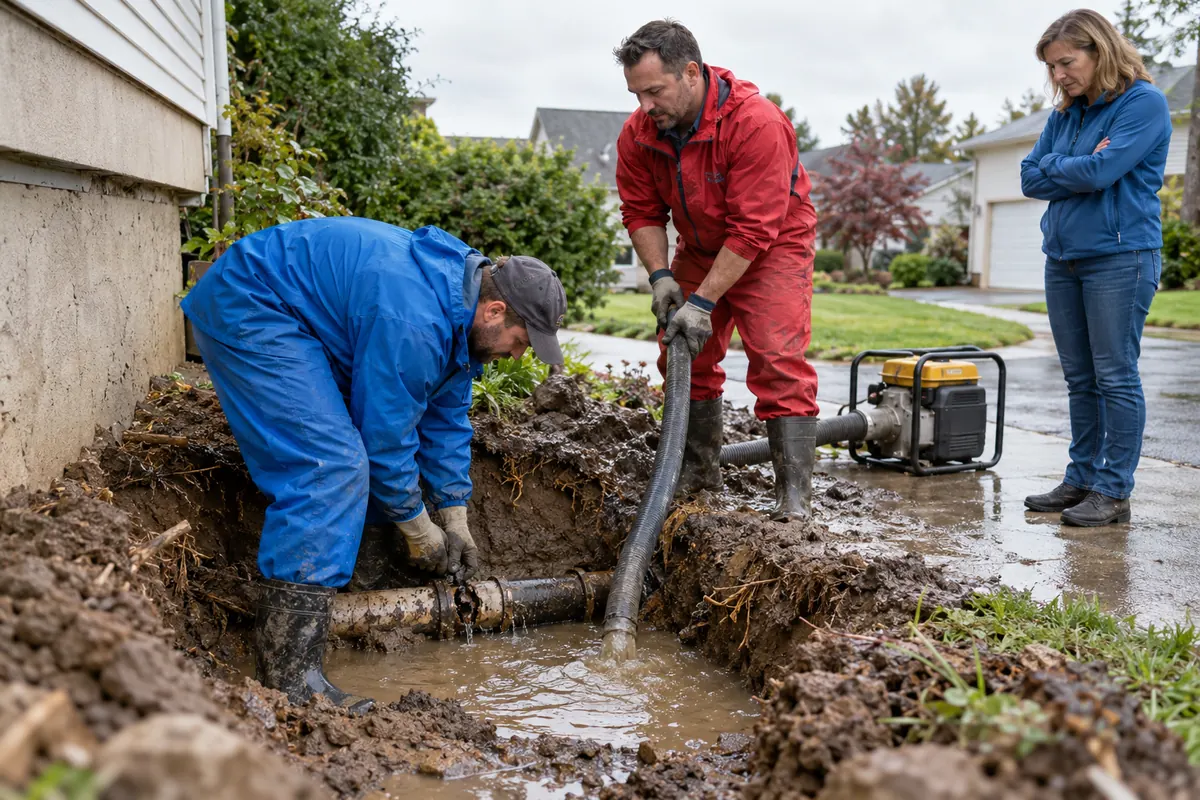
A main break outside the house can look like this:
- Water bubbling up in the yard or driveway without rain
- Low water pressure or no water at all
- A sudden spike in your water bill
- Wet soil or a sinkhole forming along the line
- Water in the crawlspace or against the foundation with dry weather
Why lines break around here
Older lines in the area run along streets such as Roosevelt Highway, and many were laid decades ago. Road work and heavy traffic shake the ground, and clay that swells and shrinks puts pressure on joints.
A hard freeze can also split a shallow service line or the exposed run at the meter. Once a break lets go, the water runs wherever the ground is softest, often right toward your foundation.
Problems after a main break
- Mud and gravel in vents and entries
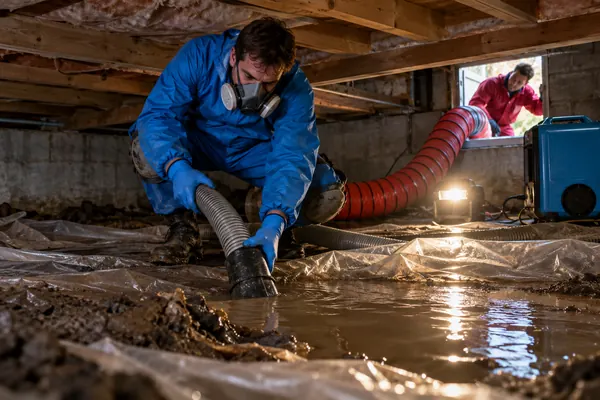
- A crawlspace that fills fast
- Soft ground and caved-in edges
- Confusion over who owns the broken pipe
Do this first
- Find the main shutoff valve and turn it off, usually at the meter box or where the line enters the house
- If it will not turn or the break is before the meter, call the water utility
- Stay away from trenches and soft ground near the break
- Move belongings off wet floors
- Take photos of the break and the water
- Call a licensed plumber for the repair
How we respond
Confirm the shutoff
Water has to be off before cleanup. If the break is before the meter we help you call the utility.
Pump the water
Portable pumps move water out of low spots, trenches and crawlspaces.
Clear mud and debris
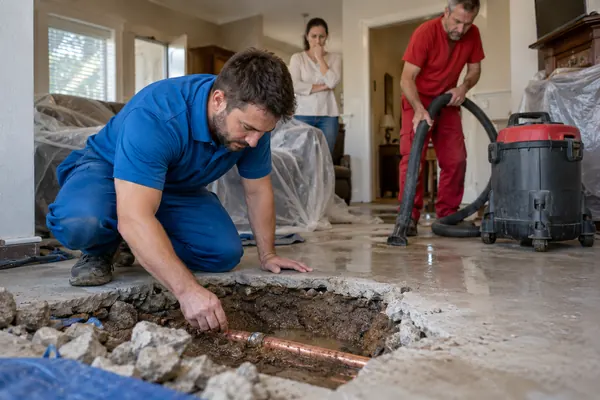
Silt and mud that washed in are shoveled and vacuumed from entries and floors.
Extract and open
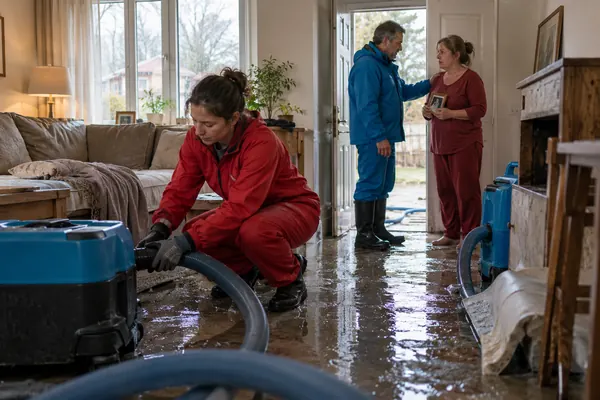
Inside, standing water is extracted and wet drywall or flooring is opened.
Dry the structure
Dehumidifiers and air movers run until framing, floors and walls read dry.
Document the loss
Photos and readings go to your insurer and, if needed, to the party responsible for the line.
When the water is coming from the street side
If the leak is on the utility side of the meter, the water utility handles the repair. Our job is the damage inside and around your home. If the leak is between the meter and the house, a plumber handles the line.
Mud and gravel often wash into crawlspace vents and entryways during a break. We shovel and vacuum that out, then dry what it touched. We also note the date and time the break started, since insurers and utilities ask.
Line break cleanup pricing
Cleanup after a line break typically runs $1,500 to $8,000 as an estimate. Mud, trenches, a flooded crawlspace and interior drying all add up. The repair belongs to a plumber or the utility. Call for an exact quote. See all price ranges.
Questions we hear about this
Who is responsible for the line?
Usually the utility owns the main and the meter, and you own the line from the meter to the house. Check with the utility.
How much water can come into a house?
A broken main can release hundreds of gallons a minute. Even a small supply line break can saturate a crawlspace in hours.
Is the water clean?
Water from a supply line is clean at first, but mud and soil make it dirty fast. We treat it as needed.
Does insurance cover this?
Often the damage inside is covered, and the pipe may or may not be. It depends on where the break occurred and your policy.
What about sinkholes?
If the ground is collapsing, keep clear and call the utility and your insurer.
Read next Read our first 60 minutes guide for a burst pipe or line break.