Why Georgia pipes freeze when nobody expects it
People up north assume Georgia does not really get cold. Then a night drops into the teens and we spend the next week answering calls. In more than 20 years of working in and around Union City, the pattern has not changed. The first hard freeze of the season catches homeowners off guard, because the house has been fine for years and nothing about it looks different.
The reason is how Southern houses are built. Water lines often run through uninsulated exterior walls, across attic floors under loose insulation, and under the house in a vented crawlspace. Builders in a mild climate never worried about it. When the air stays below about 20 degrees overnight, those pipes lose their heat to the cold around them, the water inside turns to ice, and the pressure has nowhere to go.
The pipe that freezes is not always the one that bursts
Most homeowners think the crack shows up where the ice formed. In practice the ice acts like a plug, and the pressure builds between the plug and a closed faucet. The split can open a few feet away from the frozen spot, often in a section of pipe you cannot see. That is why a kitchen faucet that has stopped running can mean a burst in the crawlspace under the floor.
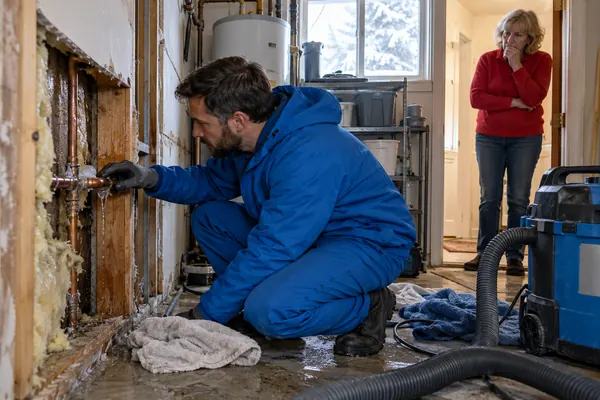
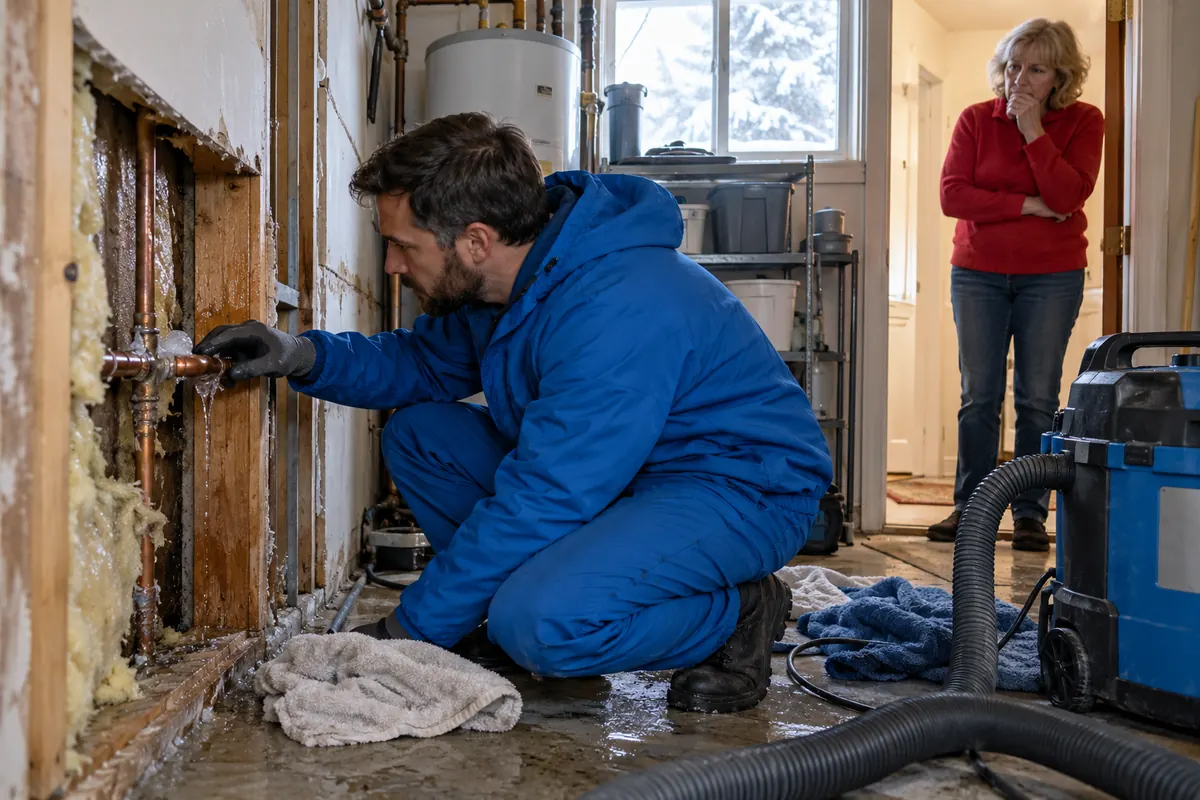
The other thing that surprises people is timing. The damage rarely happens during the freeze, because the ice is holding the water in. It happens when the temperature climbs and the plug melts. Water then pours from the crack at full pressure, sometimes for hours, before anyone notices. We talk about this in our frozen and burst pipe cleanup page, and it is the main reason the worst jobs of the winter are found on a warm afternoon.
What to do before the cold arrives
The cheapest protection is insulation. Foam sleeves on exposed pipes cost a few dollars per length and take minutes to snap on. Spend an afternoon in the crawlspace and attic with a flashlight, and cover every run you can reach. Seal the gaps where pipes enter the house with caulk or spray foam, because a small draft across a pipe is enough to freeze it. On the coldest nights, cover the crawlspace vents with foam board so wind cannot blow across the lines.
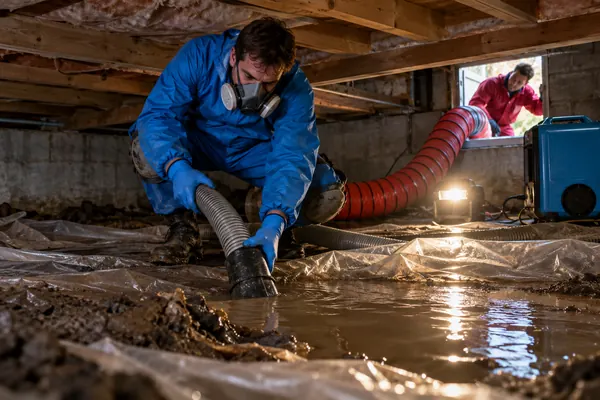
While you are under the house, look at the floor and the walls. A crawlspace that is already damp is colder and holds more moisture, which is one reason we see freeze damage and mold show up together. If you find standing water or wet insulation, our guide to why Union City crawlspaces hold water explains where it usually comes from, and our crawlspace water damage and drying crew can pump and dry the space before the next freeze.
Also find your main shutoff before you need it. Walk to the valve, turn it a quarter turn and make sure it moves. A valve that is seized or buried behind boxes is the worst thing to discover with water on the floor. Make sure everyone in the house knows where it is.
What to do on the coldest nights
When the forecast drops into the teens, a few habits make a real difference. Let a faucet drip, especially one on an exterior wall or at the far end of the house from the water heater. Moving water is slower to freeze, and a trickle costs a few cents. Open the cabinet doors under sinks on outside walls so warm room air reaches the pipes. Keep the thermostat at 60 degrees or higher, even if you leave town, and keep the garage door closed.
Do not forget the outside. Disconnect garden hoses, cover the spigots and shut off any irrigation system. Pipes at the meter and backflow device are exposed and often the first to go. If you travel in winter, ask a neighbor to look in. A small leak sensor under the water heater and sinks costs little and sends an alert to your phone, and a smart shutoff valve can close the water for you.
If a pipe does freeze
If a faucet stops running on a freezing morning, close the main valve first. That keeps a hidden split from flooding the house when the ice melts. Then thaw the frozen section slowly with a hair dryer or warm towels, working from the faucet back toward the frozen spot. Never use a torch, a propane heater or any open flame. We have seen more than one fire started that way, and the damage was worse than the water.
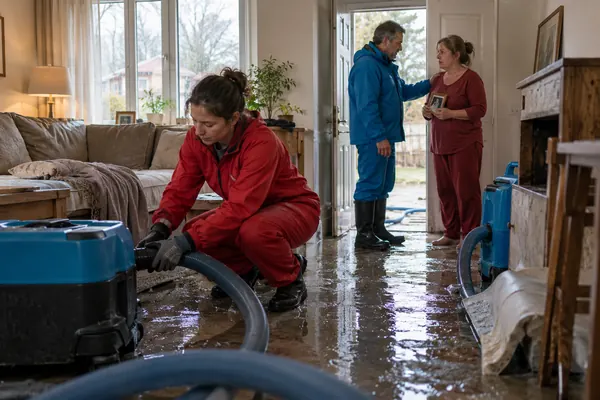
If you see frost on a pipe, a bulge in a wall, a ceiling stain growing under the attic, or you hear running water with everything off, shut off the main and call a plumber for the pipe. If water is already spreading, call us too. Our emergency water damage restoration crew answers the line 24/7, and the faster we pump and start drying, the less framing and drywall has to come out. Our guide to the first 60 minutes after a burst pipe walks through exactly what to do while you wait.
Walk the house after the thaw
When the temperature rises, do a slow walk through the house. Look at ceilings below the attic, wall bases on outside walls, the ceiling under any upstairs bathroom, and the floor near the water heater. Open the crawlspace and look for drips. Watch the water meter: if it keeps moving with every fixture off, you have a leak somewhere. Do this the same afternoon the pipes thaw, not the next week.
If the damage is more than you can handle, we are glad to come out and take readings. We keep a record of what was wet and what was done, which your insurer will want. If you want to know what a job like this tends to cost, see our pricing page for typical estimate ranges.
Quick answers
At what temperature do pipes freeze in Georgia?
A pipe can freeze when the air around it stays below about 20 degrees for several hours, and sooner if it is in a wall, attic or open crawlspace with wind on it.
Should I leave the water dripping all night?
On the coldest nights, yes, especially on exterior walls. A slow drip keeps water moving and relieves pressure if ice forms.
Does homeowners insurance cover a burst pipe?
Sudden bursts are often covered. Damage from a heat that was turned off or a house left unattended may be treated differently, so check your policy.