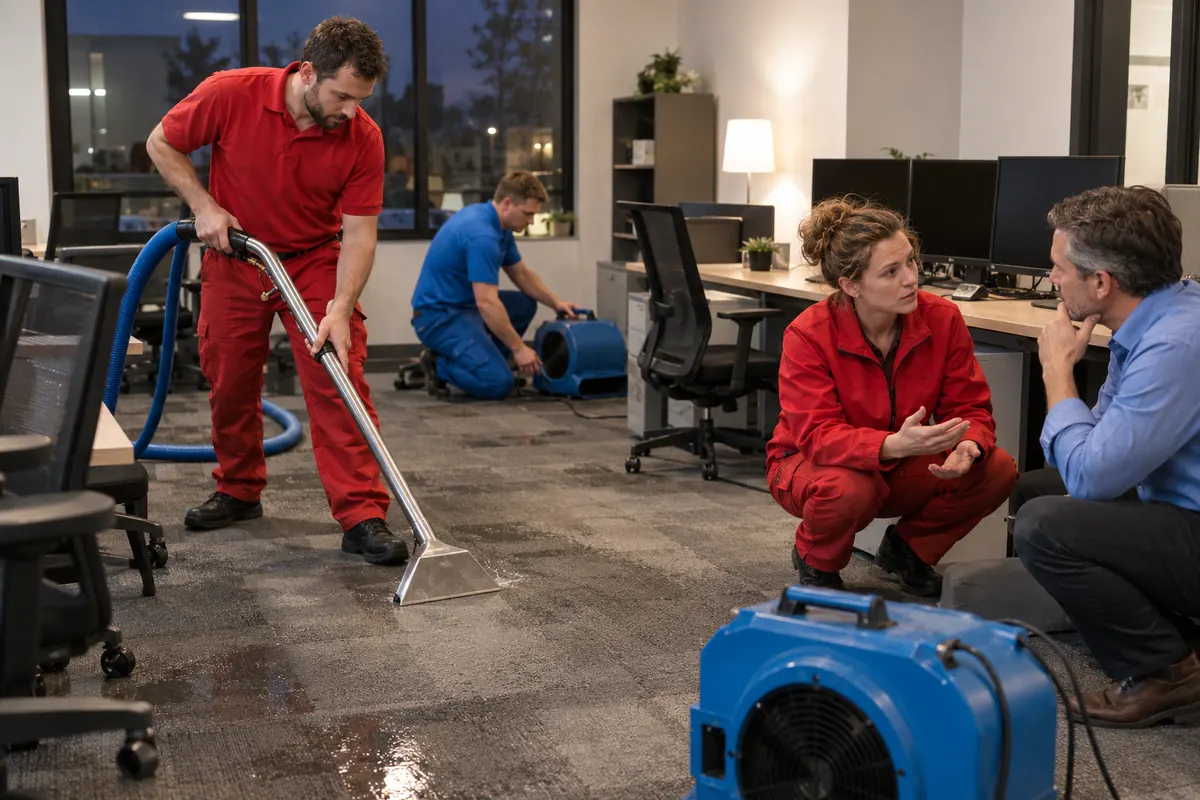
Why Union City commercial buildings take big hits
The commercial corridors along I-85, US-29 and SR-138, and the roads around Hartsfield-Jackson Airport, are lined with distribution centers, warehouses, big-box retail and strip centers. Roofs are huge, drains are few, and one clogged scupper in a Southeast thunderstorm can put an inch of water across a slab.
Offices and multi-tenant strips add shared walls and ceilings. A failed rooftop condensate line or a broken sprinkler head in one suite can soak the units beside and below it. Union City's hot, humid summers then slow the drying, so a wet carpet-tile floor left over a weekend is a bigger loss than the same floor in winter.
What commercial water loss looks like
Business losses rarely start as one clean puddle. In Union City buildings we usually see:
- Ceiling tiles stained, sagging or dropping in office suites
- Water pooling on a warehouse slab at the dock doors and along the walls
- Carpet tile lifting or smelling musty in a retail space
- A sprinkler or fire-line leak that wets several tenant suites at once
- Inventory on the bottom racks wicking moisture up from a wet floor
- A rooftop HVAC unit dripping condensate through the ceiling below
How we run a commercial job
Assess the whole building
We walk every wet suite, bay and hallway, map the water and agree on phases with the property manager before equipment goes in.
Keep the business running
Where the layout allows, we isolate wet zones with containment and route equipment so open areas, offices and loading docks stay usable.
Extract at scale
Truck-mounted units and high-volume pumps clear slab floors fast. Wet carpet tile, pad and ceiling tile come out and go to disposal.
Dry the full footprint
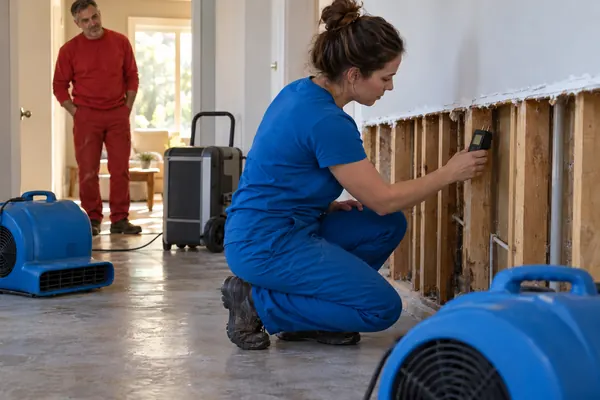
Industrial air movers, low-grain refrigerant dehumidifiers and desiccant units are staged so the whole building dries evenly.
Track every suite
We chart moisture readings room by room and send a daily status you can pass to tenants, owners and your insurer.
Document for the claim
Photos, logs, equipment records and a written scope are organized for your carrier, adjuster or risk manager.
Issues we see on big-building jobs in Union City
- Water crossing demising walls into the next tenant
- Concrete slabs that dry slowly under coatings and sealers
- Access limits at secured suites and loading docks
- Inventory and records that were wet before anyone arrived
- Unclear who in a multi-tenant building approves the work
Large-loss drying equipment for big floors
A warehouse slab or a retail floor needs more than a handful of fans. We stage high-volume air movers in rows, run desiccant dehumidifiers outside a bay door with ducting into the building, and use truck-mounted extraction on wide-open floors.
In multi-tenant buildings we draw a map of equipment and cords so nobody trips on them, and we tag each machine with the suite it serves. That also makes the insurance paperwork easier to match up.
Steps for the facility manager
- Shut off the water source and, if safe, power to the wet section
- Move inventory, files and electronics off the floor
- Tell tenants and employees which areas to avoid
- Photograph the damage before any cleanup begins
- Find your insurance policy number and the carrier's claim line
- List who holds keys and access codes for after-hours entry
Commercial water damage restoration cost in Union City, GA
Commercial losses vary the most. Square footage, tenant phasing, ceiling and slab materials, and equipment count drive the figure. These are typical estimates for the Atlanta area, not guaranteed prices. A walkthrough gives a real number. Call for an exact quote.
| Job type | Typical estimate |
|---|---|
| Small office suite or retail unit | $3,000–$6,000 |
| Multi-tenant ceiling or sprinkler leak | $5,000–$12,000 |
| Warehouse or distribution slab flooding | $8,000–$25,000 |
| Large-loss or multi-building property | $25,000+ |
Questions we hear about this
Can my Union City business stay open during the work?
Often partly. We set up containment and route equipment so unaffected areas keep working. A full closure depends on how far the water spread and what it touched.
Do you work with property managers and insurers?
Yes. We provide daily logs, photos and a written scope, and we can walk an adjuster through the building.
What equipment handles a large warehouse?
Truck-mounted extractors, high-volume pumps, industrial air movers and desiccant dehumidifiers matched to the square footage.
How do you protect tenants in a shared building?
We seal off wet suites, update each tenant on what is happening, and keep cords and hoses out of walkways and exits.
Can you respond after hours?
The emergency line is available 24/7 for commercial customers too. Call it any time water is moving through a building.
Read next Handling a commercial claim? See how insurance treats water damage in Georgia.