How you know it is an emergency
Not every drip needs a midnight call. These do:
- Water spreading across a floor and reaching a second room
- A ceiling that sags, bulges or drips steadily
- Water running inside a wall or from a fixture you cannot shut off
- Dark stains and a damp smell showing up on drywall after rain
- A breaker that keeps tripping near wet outlets
What the crew does when it arrives
Check for hazards
Before anyone starts work we look for live electrical, sagging ceilings and slick floors, and shut off power to wet circuits if needed.
Stop the source
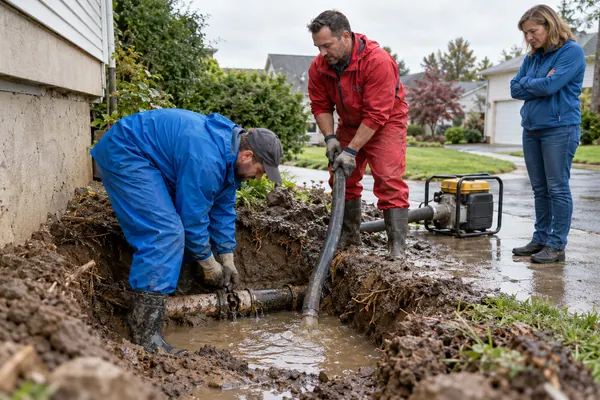
If water is still running we close the shutoff or isolate the line so nothing new comes in.
Pump and extract
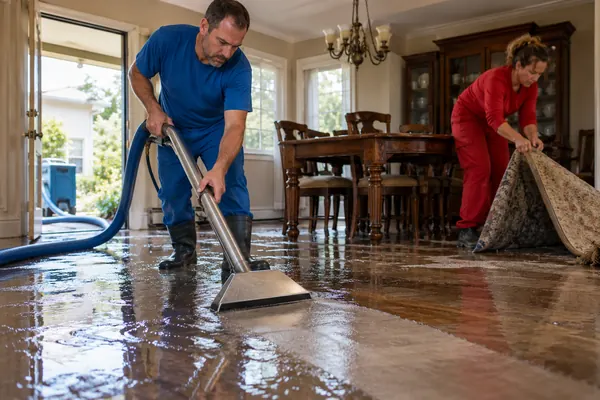
Portable and truck-mounted extractors pull standing water off floors and out of carpet pad.
Protect what can be saved
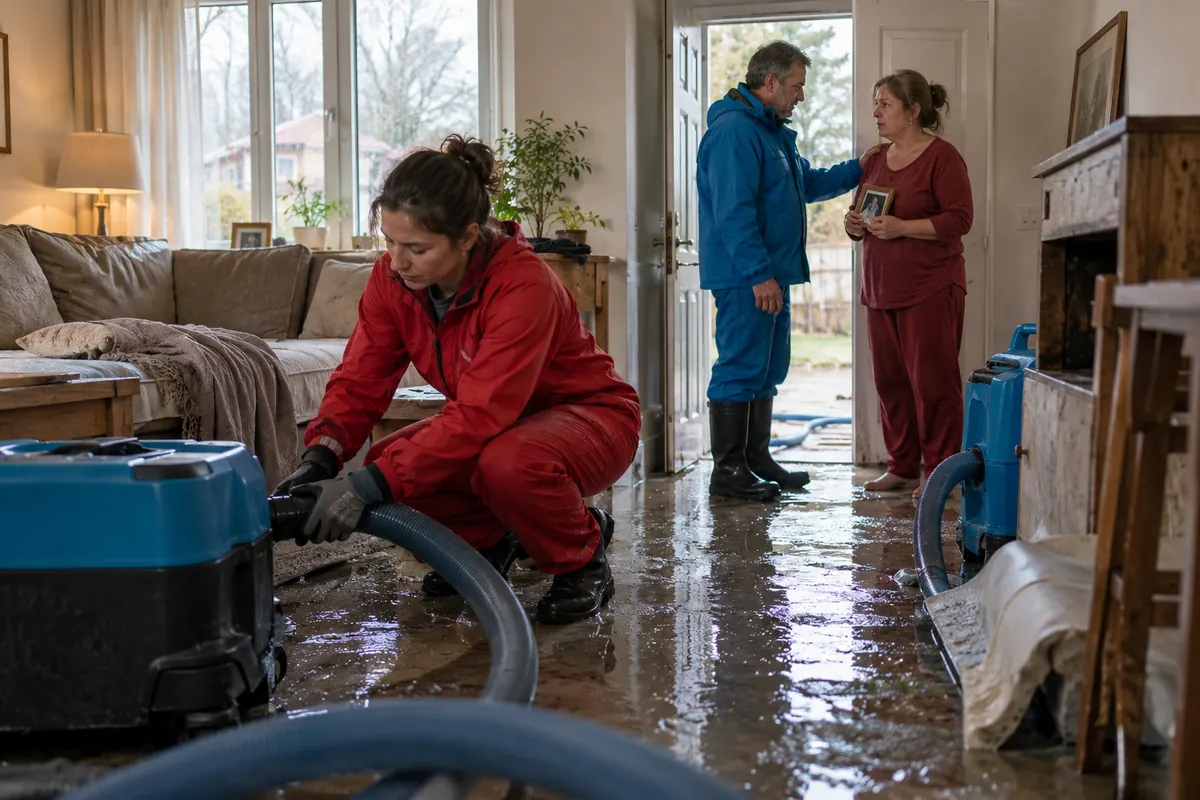
We lift furniture off wet floors, move electronics and keepsakes to a dry room, and cut out pad that cannot be saved.
Set the drying equipment
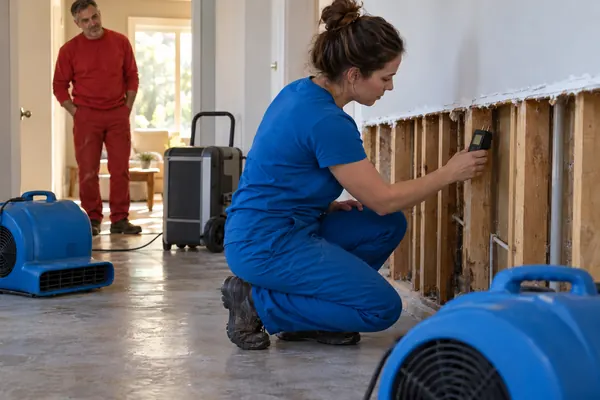
Air movers and dehumidifiers go in, placed to fit your floor plan, and we record moisture readings.
Write it down
Photos, readings and a written scope go in a file you can hand to your insurance adjuster.
Problems we run into most
- Water that has already reached a second floor or lower room
- Homeowners who waited until morning and found it spread
- Wet carpet pad glued down over slab
- Breakers or outlets sitting in the wet area
Why Union City houses go bad fast
From May through September the air here holds so much moisture that wet drywall and carpet barely dry on their own. A soaked floor left overnight in July is a bigger problem than the same floor in January.
A lot of homes near I-85 and along US-29 sit on a slab or over a crawlspace. Water that slips under flooring or into the crawl has nowhere to go, so it keeps wicking into framing. The red clay in the yard drains slowly, which keeps storm water pressed against foundations.
What counts as the first hour
The first hour is when the damage is still cheap to stop. Water moves from a floor into baseboards, from baseboards into drywall, and from drywall into insulation. Each step adds materials that have to be cut out.
Tell us if water has been sitting overnight, if the house has been closed up in summer heat, or if the carpet pad feels spongy. Those details change what we bring and how many people come. We also ask about pets, kids, and anyone who uses medical equipment that needs power.
While you wait for the crew
- Close the main water valve if you can reach it safely
- Do not stand in water near outlets, appliances or the breaker panel
- Lift small items, rugs and anything on the floor to dry surfaces
- Take photos and video of every wet room before anything moves
- Keep kids and pets out of the wet area
- Skip the household vacuum. It is not made for water
What an emergency call usually costs
A typical estimate for emergency restoration runs about $1,200 to $5,000. It climbs with the number of rooms, how long the water sat, and whether it came in clean or dirty. Night and weekend calls can add to the labor. Call for an exact quote. See all price ranges.
Questions we hear about this
Do you really answer at night?
Yes. The emergency line is available 24/7, weekends and holidays included. Office hours run Monday to Friday, 8 AM to 6 PM, but water does not keep those hours.
How long does drying take?
Most homes need three to five days of equipment. We read the wood and drywall every day and pull the gear only when the numbers say dry.
Will my insurance pay for this?
That depends on your policy and where the water came from. Sudden pipe or appliance failures are often covered. We document everything for your adjuster.
Can I stay in the house while you work?
Usually yes, if the electrical is safe and the water was clean. Sewage or heavy contamination is a different story, and we will tell you straight.
What if I am not sure the damage is bad enough?
Call and describe it. We will tell you whether it needs a crew now or can wait for the morning.
Read next Not sure what to say when you call? Read what to tell a water damage company.