What we hear when the phone rings at night
Most burst pipe calls start the same way. Someone wakes up to the sound of water, or steps out of bed into a wet floor, or notices the ceiling bulging. They call from a dark hallway in a panic and ask what to do. After more than 20 years of answering that call, we have a simple order we use, and it works because it puts first things first. The shorter you keep the first hour, the less of the house you lose.
Water spreads faster than people expect. A pipe can release gallons a minute. Within an hour a typical bathroom or kitchen can have water in the flooring and the walls, and it can already be dripping into the room below. Each step in this post is about cutting that off early.
Minutes zero to five: stop the water
Your first job is the main shutoff. It is usually where the water line enters the house, in a utility closet, the garage, near the water heater or in a box by the street. A lever handle is closed when it sits crosswise to the pipe. A round wheel turns clockwise until it stops. If you have never touched it, you will be glad you looked in advance, because old gate valves can stick.
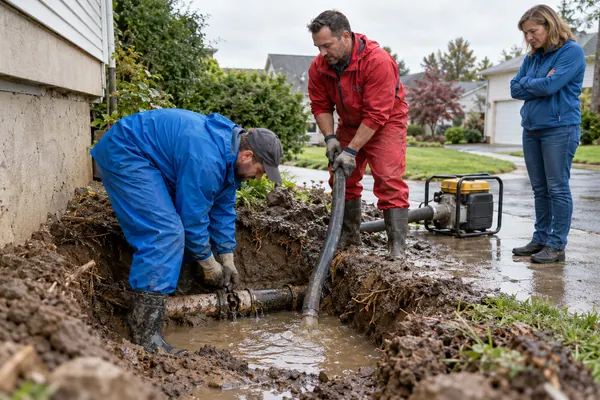
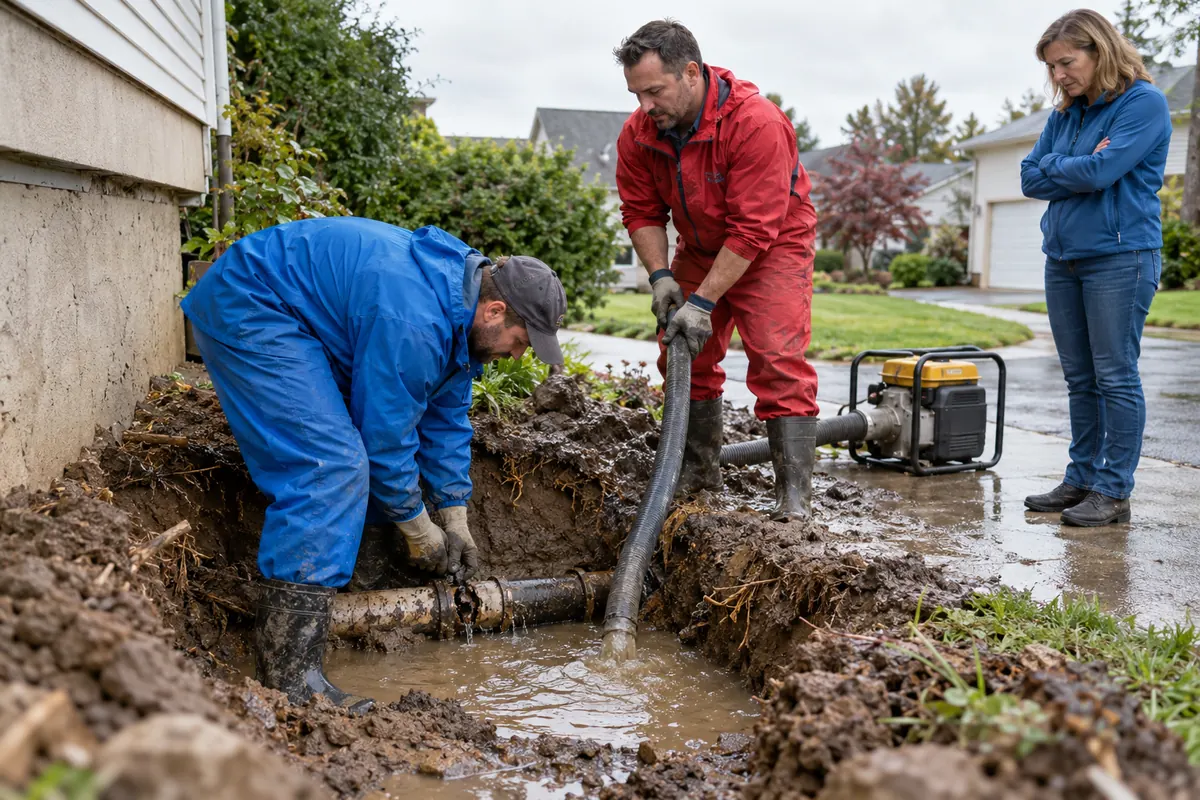
If the valve will not turn, or the break is in the yard or at the meter, call the water utility. A break on the street side of the meter is theirs to repair, and ours is the damage inside and around your home, as we explain on our water main and supply line break cleanup page. If you can reach it safely, open one faucet low in the house to drain the lines and take pressure off the break.
Minutes five to fifteen: make the house safe
Water and electricity are the real danger. Do not walk through water near outlets, appliances or the breaker panel. If the panel is dry and you can reach it without stepping in water, switch off the breakers for the wet rooms. If you cannot, stay out and call the electric utility or an electrician. Keep children and pets out of the wet area, and skip the household vacuum, which is not made for water.
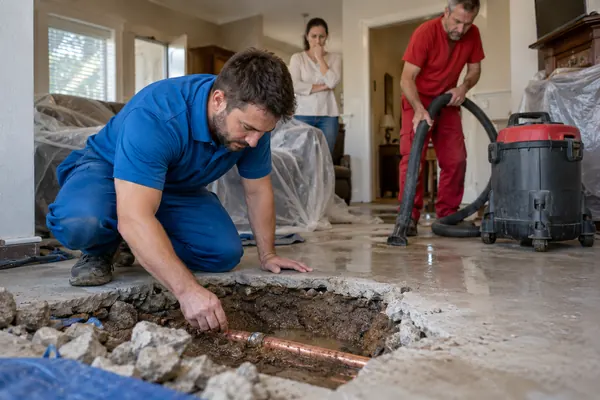
Resist the urge to find the leak by cutting into a wall. A leak behind drywall or under a slab is a plumber's job to locate, and cutting blind makes the cleanup bigger. If you hear running water but see nothing, close the main and check your water meter with every fixture off. If it still moves, you have a hidden leak, which we also cover under slab leak water damage repair.
Minutes fifteen to thirty: make the right calls
Now call a crew. Tell us where the water is, how much, how long it has been running and whether it is off. Our emergency water damage restoration line is open 24/7. If you want to know what to say, our post on what to tell a water damage company when you call lays out the questions in order. Then call a plumber to fix the pipe, because we handle water and drying, not the repair.
If you rent, tell your landlord or property manager now and get it in writing. If you own the home, call your insurer to open a claim. You do not have to wait for the adjuster before starting extraction. Most policies expect you to take reasonable steps to prevent further damage, and getting water out counts.
Minutes thirty to forty-five: protect what you can
While you wait, move what you can. Lift furniture legs off wet floors and put foil or plastic blocks under them so stain does not transfer. Move electronics, photos, papers and keepsakes to a dry room. Pull up small area rugs and hang them over a dry surface. Leave wall-to-wall carpet alone, since lifting it wrong can tear it, and our crew will handle it with the right tools.
This is also when you protect people. Anyone with asthma or breathing trouble should leave the area if the water is dirty. If the water came from a toilet, a floor drain or outdoors, treat it as contaminated and keep out until a crew arrives. Our sewage backup cleanup page explains why.
Minutes forty-five to sixty: write it down
Take photos and short videos of the source, every wet room, damaged items and any water stains. Do it before you move things, and again after. Note the time you found it, the time you shut off the water and who you called. It feels like busywork at 2 a.m., but it is exactly what the adjuster will ask for later. Our guide to homeowners insurance and water damage in Georgia explains why the record matters.
Then wait for the crew, and keep the house as it is. The less you move, the easier it is for us to see where the water went.
What the crew does when it arrives
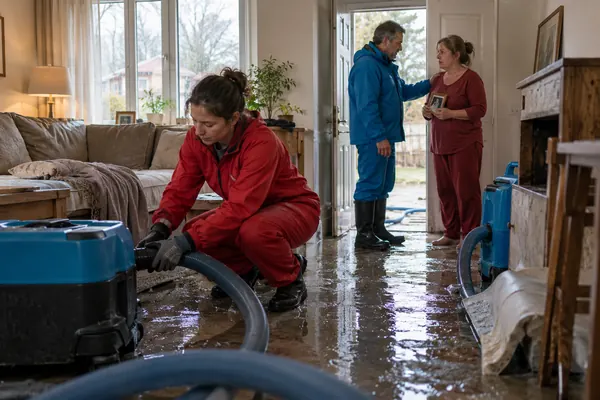
We check for hazards, find the source and begin pumping and extracting. We cut out wet pad and drywall that cannot be saved, set air movers and dehumidifiers, and take moisture readings. A tech returns daily to check the numbers, and equipment comes out only when the structure reads dry. If you want to understand why drying takes days, our structural drying and dehumidification page explains it. For what a job like this tends to cost, see our pricing page.
Quick answers
Can I turn the water back on after the pipe is shut off?
Wait until a plumber has repaired the line. Turning it on too soon can restart the flood, especially after a freeze when ice may still be plugging the crack.
Should I leave the house?
If the water is dirty, the ceiling is sagging or power is near the water, yes. Otherwise stay and protect what you can until the crew arrives.
Do I wait for my insurance company before calling you?
No. Stop the water and call a crew right away. Most policies expect you to prevent further damage, and we keep records for your claim.