How we handle an appliance leak
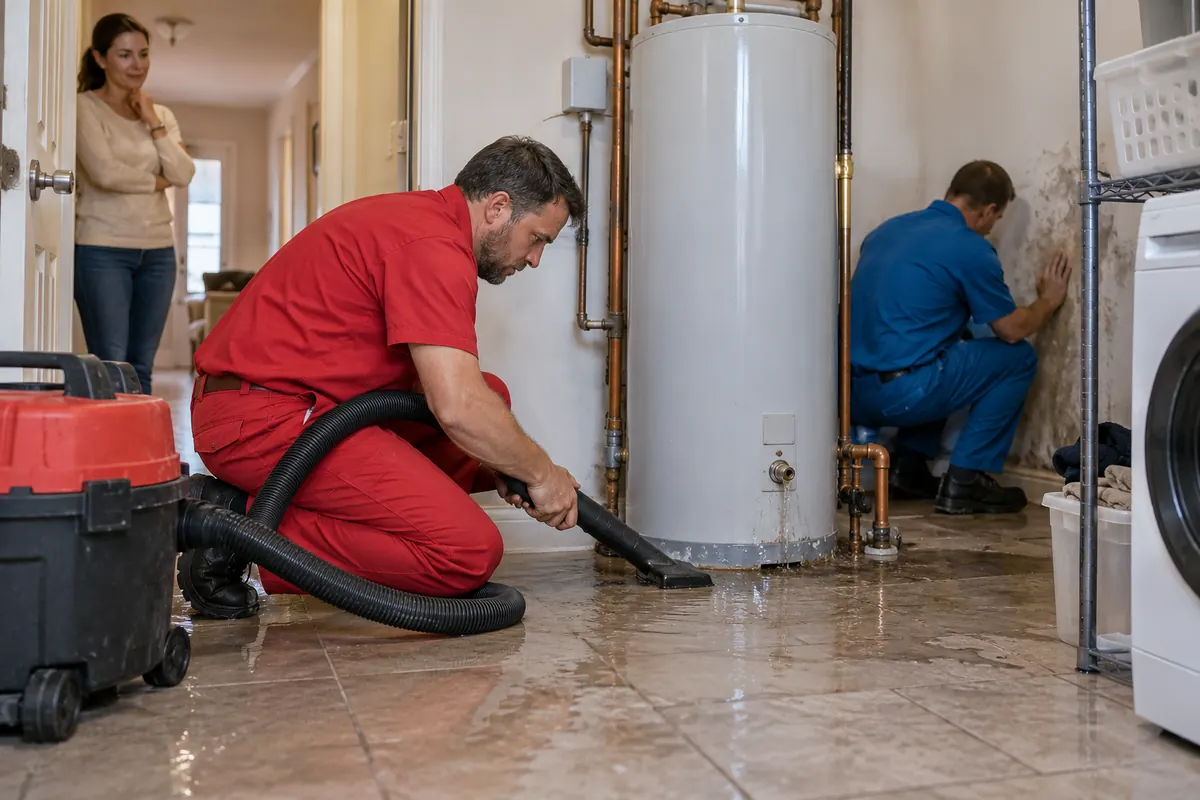
Shut off supply
We close the water and, for a water heater, the supply valve and power or gas. We never leave a hot-water tank running.
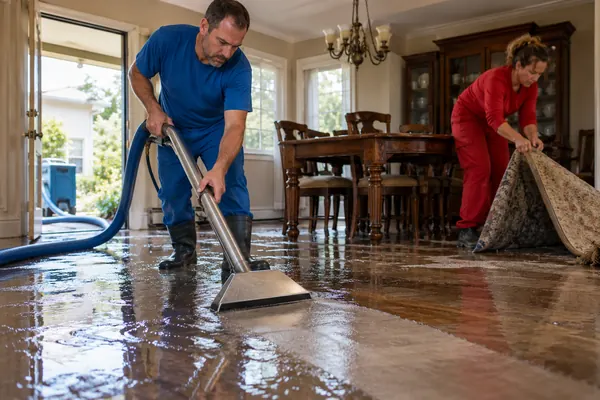
Extract the spill
Wet vacuums and extractors take the water off tile, vinyl and carpet.
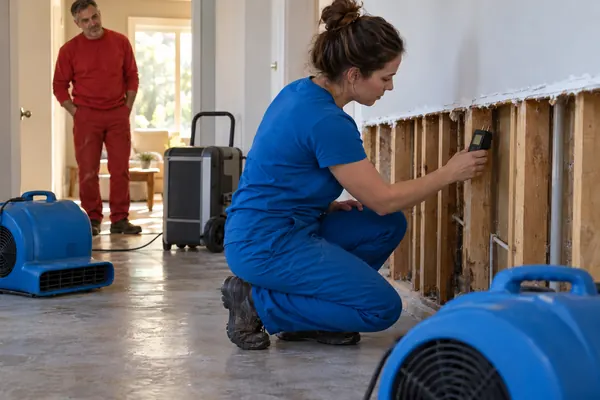
Check hidden spots
Water gets under cabinets, behind toe kicks and into neighboring rooms. We scan with a meter and camera.
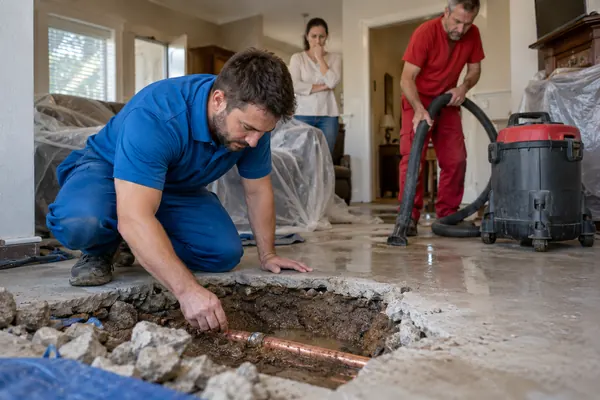
Lift flooring where needed
Vinyl and laminate that trap water get lifted. Wet baseboards and bottom drywall are trimmed.
Dry the space
Air movers and a dehumidifier dry wall bases, cabinets and subfloor.
Report the cause
We note the failed part for your insurance claim and for your plumber or appliance technician.
Warning signs before an appliance fails
Most appliance leaks give clues:
- Rust streaks or puddles around the base of a water heater
- Hot water that runs out quickly or smells like rust
- Washer hoses that look cracked, bulging or kinked
- Floor tile or flooring that curls near the dishwasher
- A damp patch on the wall behind the fridge ice line
Frequent appliance leak issues
- Slow leaks that soaked the cabinet base
- Tile with water beneath it
- Water heater closets with no drain pan
- Hoses that burst while no one was home
If an appliance is leaking right now
- Close the shutoff valve behind the washer or under the sink
- For a water heater, turn off the cold water supply at the top of the tank
- Turn off the water heater power or gas if you can reach it safely
- Unplug the appliance only if the floor is dry
- Mop up small spills and open cabinet doors to air out
- Keep the failed hose or part. Your insurer may ask for it
Why appliances leak in Georgia homes
Water heaters in this area often sit in garages, closets and attics. Hard use, mineral buildup and age wear tanks out. Many homes have laundry rooms on slab, so water spreads quickly across tile and into adjacent rooms.
In rentals and older houses, rubber washer hoses stay in service long past their lifespan. A burst hose can run for hours when no one is home.
Questions we hear about this
Can a leaking water heater flood the whole house?
A tank holds 40 to 50 gallons, and a burst can empty it in minutes. A slow leak can run for days under the tank before anyone notices.
Who replaces the water heater?
A plumber does. We handle the water cleanup and drying.
Will insurance pay?
Sudden failures often are covered. Long-term seepage may be denied. Photos and the failed part help.
What about a fridge ice-maker line?
Those leaks are slow and hide behind the fridge and under cabinets. We use a meter to check the walls and floor around it.
How long until the floor is dry?
Most appliance leaks need two to four days of drying.
Appliance leak cleanup cost
Cleanup after an appliance or water heater leak typically runs $500 to $2,500 as an estimate. A slow leak behind cabinets costs more than a quick spill on tile. Replacing the appliance is separate. Call for an exact quote. See all price ranges.
Check the drain pan and the shutoffs
A water heater in a closet or attic should have a drain pan and a pipe that leads outside or to a floor drain. If the pan is full or the pipe is dripping, the tank is leaking. Washers should have shutoff valves you can reach without moving the machine.
If either is missing, ask your plumber. A cheap shutoff valve, and a braided hose in place of the old rubber one, are a short job and can save a flooded laundry room.
Read next Get the first steps right. Read your first 60 minutes after a pipe failure.