What a wet crawlspace looks like from inside the house
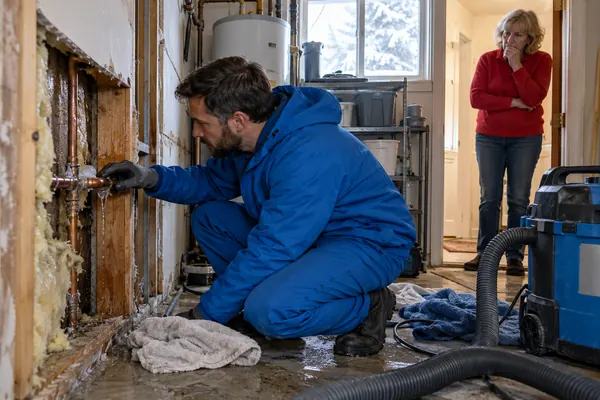
You may not need to crawl under there to know. Look for:
- Floors that feel soft, bouncy or cold over one section
- Musty smell that comes up through floor registers
- Doors and cabinets that start sticking in wet weather
- Fallen insulation, sagging batts or dark stains on the subfloor
- Condensation on ductwork or pipes under the house
Red clay and your crawlspace
Piedmont red clay swells when it is wet and shrinks when it dries. It also drains poorly, so rainwater sits against the foundation wall and works its way through vents, cracks and the gap where the wall meets the footing.
Add a Georgia summer and the air under the house turns thick and warm. Cool ductwork sweats, wood stays damp, and mold gets what it needs. A dirt floor with no vapor barrier makes it worse.
Problems under the house
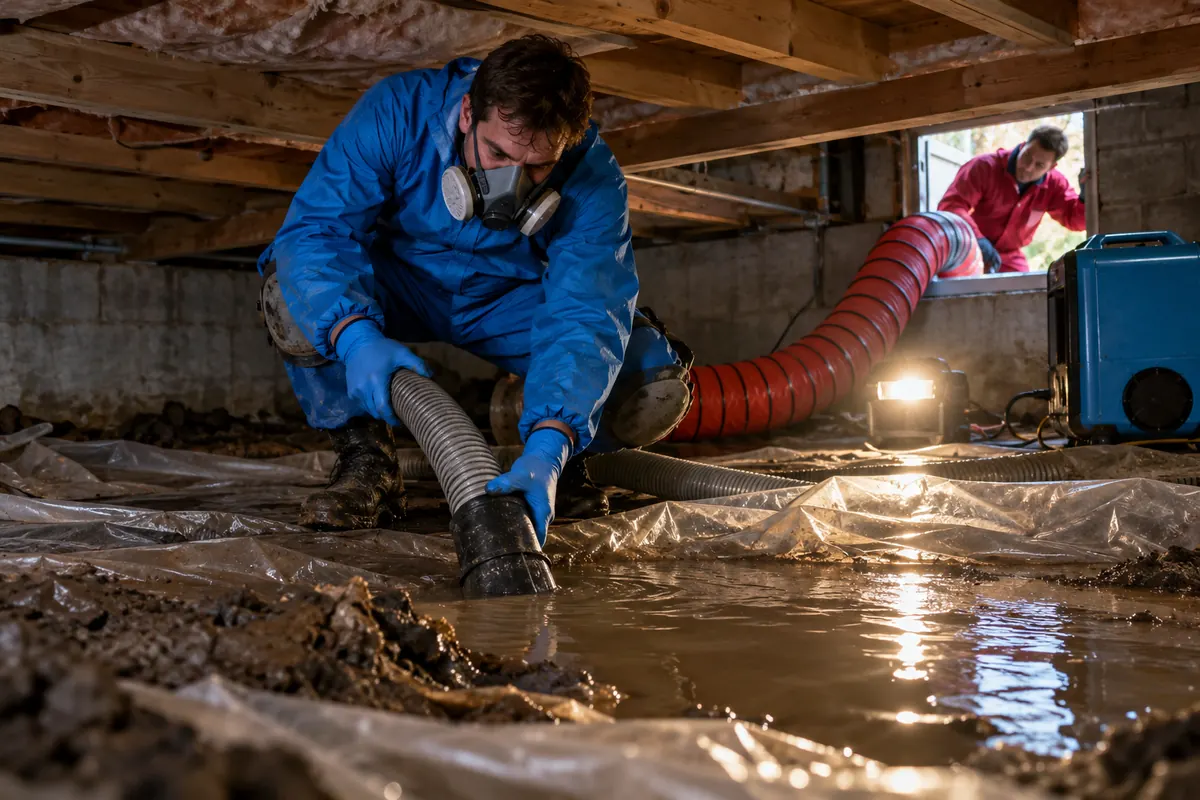
- Mud so deep the pump clogs
- Low clearance that slows every task
- Wet insulation hanging against the subfloor
- Water that returns after the next rain
What we look for under there
Besides standing water, we check for sagging insulation, fallen ductwork, wet sill plates, rust on fasteners and white powder on block walls that shows water has been passing through. We also look for signs of past wetting, such as tide lines on piers.
Pest activity, stuck vents and plastic that has pulled away from the wall also tell us how water is getting in. We take photos so you can see what we see, since most people never go into their crawlspace.
Our crawlspace drying steps
Inspect and photograph
We go in with lights and a camera to find the water, the wet wood and the entry point.
Pump it out
A submersible pump clears standing water. Mud and loose debris are bagged and removed.
Remove wet insulation
Soaked batts and loose plastic that trap water against the subfloor come out.
Dry the framing
Air movers and a dehumidifier are set up in the crawl, or ducted from outside, to dry joists and subfloor.
Check the barrier
We look at the vapor barrier, vents and drainage clues and note where water is getting in.
Verify with readings
Wood moisture is tested at joists, sill plates and the subfloor before equipment leaves.
Before we come out
- Clear the access hatch or door so we can get a pump through
- Keep dogs inside. Crawlspaces are a hazard for them too
- Note when you first saw the problem and what the weather was
- Check gutters and downspouts for water dumping at the foundation
- Do not go into a crawlspace with standing water near wiring
Crawlspace work: typical price
Pumping and drying a crawlspace usually runs about $800 to $4,000 as a typical estimate. Tight access, deep mud and wet insulation raise the labor. Repairing drainage or vapor barriers is separate. Call for an exact quote. See all price ranges.
Questions we hear about this
How do I know if my crawlspace has water?
Open the access door and use a flashlight. Shiny floors, wet insulation, dripping pipes or a damp smell all say yes.
Can you fix what is letting water in?
We dry the space and point out likely entry points. Grading, drains and sump work are done by a contractor, and we can work with yours.
Should the vents be open or closed?
In a Georgia summer, open vents can pull in humid air and make the crawl wetter. Talk to a foundation specialist before you change them.
Does wet wood need to be replaced?
Usually not if it is dried and has no rot. Soft or crumbling wood needs a carpenter.
How long does a crawlspace take to dry?
Often three to five days. Wood holds water longer than drywall, so we check readings every day.
Read next Curious why this keeps happening here? Read why red clay crawlspaces hold water.