Signs of mold in a house
Look and smell before you test:
- Black, green or white fuzzy patches on drywall, baseboards or ceilings
- A musty smell that is stronger in closets and behind furniture
- Wallpaper or paint that peels where it stays damp
- Allergy-type symptoms that ease when you leave the house
- Stains that return after cleaning
How we remove mold
Find the moisture
We locate the water source first. If it is still active, removal alone will not last.
Contain the area
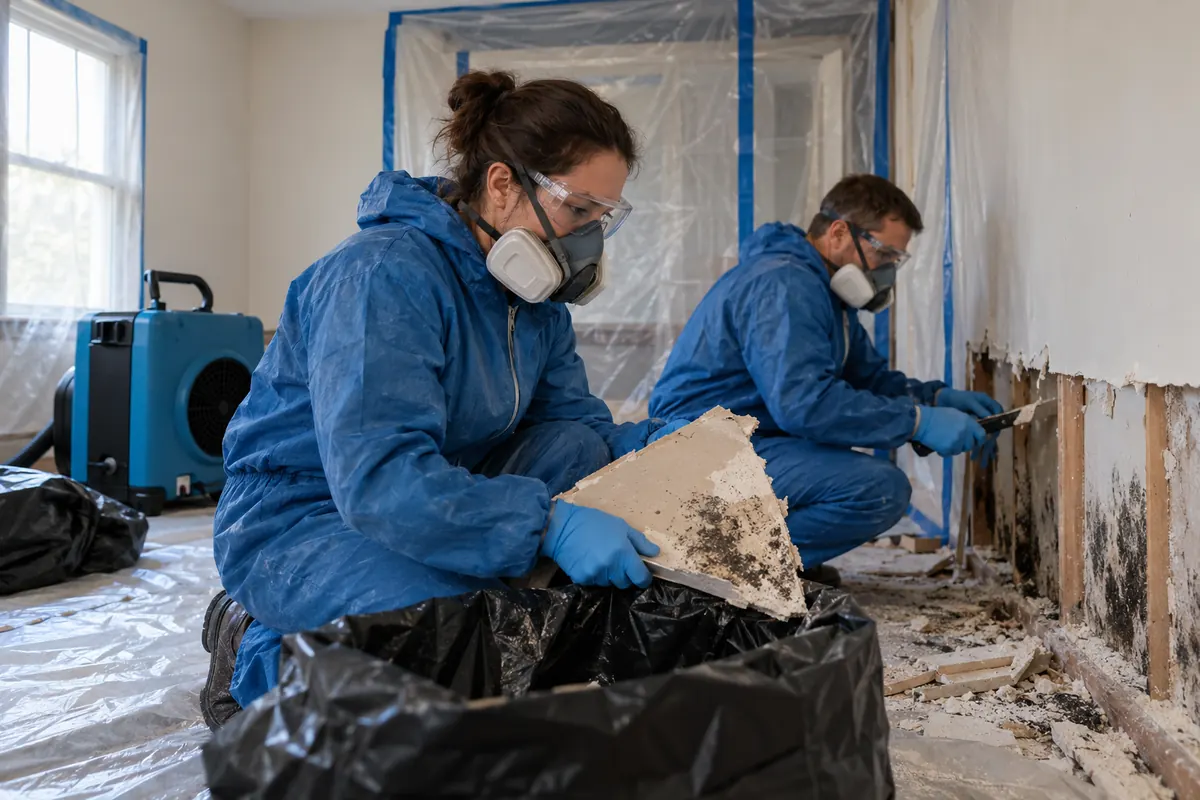
Plastic sheeting and negative air machines keep spores from drifting into clean rooms.
Protect the crew
Workers wear respirators, goggles and disposable suits.
Remove infested materials
Mold-damaged drywall, insulation and carpet are cut out, bagged and removed. Framing is cleaned or sanded.
Clean the air and surfaces
HEPA vacuums and air scrubbers pull spores from the air and surfaces.
Dry and verify
Dehumidification brings the space to a stable moisture level. We advise on rebuilding and ventilation.
What makes mold jobs hard
- Growth behind walls you cannot see
- A moisture source that was never fixed
- Spores spread by earlier DIY scrubbing
- Disagreement between testers and insurers
Why mold takes off in Georgia
Hot, humid summers mean the air around Union City is full of moisture. Any leak, flood or poorly dried material gives mold what it needs. A damp wall in July can show growth in a couple of days.
Problem spots around here are crawlspaces, closets on exterior walls, HVAC closets and bathrooms with weak exhaust fans. Even a small leak behind a vanity can feed a patch for weeks.
Questions we hear about this
Can I just clean mold with bleach?
Bleach may lighten the stain but it does not reach mold roots in porous material. Removal of the material is the reliable fix.
Do I need mold testing?
Not always. If you can see it or smell it, treatment is the same. Testing can help for insurance or a sale, and an independent tester avoids a conflict of interest.
Will mold come back?
Only if moisture returns. We dry the structure and point out causes like leaks or poor ventilation.
Does insurance cover mold?
Often only when it follows a covered water loss. Gradual leaks and long-term humidity are commonly excluded.
How large a job is it?
A single closet wall can be a half-day job. A crawlspace or whole-floor infestation takes longer.
Testing, and what we do not do
We do not claim to be a lab. If you want air or surface testing, hire an independent tester who does not also sell removal. Their report can tell you what is growing and give your insurer or a buyer something in writing.
What we do is take out damaged material, clean what stays, and fix the moisture problem. If a patch is bigger than a few square feet, or sits in the HVAC system, we will tell you plainly and plan containment accordingly.
Mold removal: price range
Mold remediation usually runs $1,500 to $7,500 as a typical estimate. A closet wall is the low end. Whole crawlspaces, HVAC contamination and large drywall removal are the high end. An exact quote needs a look at the growth. See all price ranges.
Do this while you wait
- Do not scrub or bleach mold. It sends spores through the air
- Turn off the HVAC fan if it serves the moldy area
- Keep people with asthma or immune conditions away from the area
- Fix or stop any active leak if you can do so safely
- Photograph the growth and note when you first saw it
Read next See how insurers treat mold in our guide to Georgia water damage coverage.