Basements are less common here, so they get less attention
Most Union City homes sit on a slab or over a crawlspace, so people with a full basement or a daylight walkout often do not expect trouble. The clay soil holds water against the walls long after the rain stops.
When storms stack up, low spots in the yard and clogged yard drains push water toward the lowest door. Sump pumps help only if the power stays on.
How a basement cleanup goes
Check safety first
We confirm the water is not touching live electrical or the furnace and shut power to the area if needed.
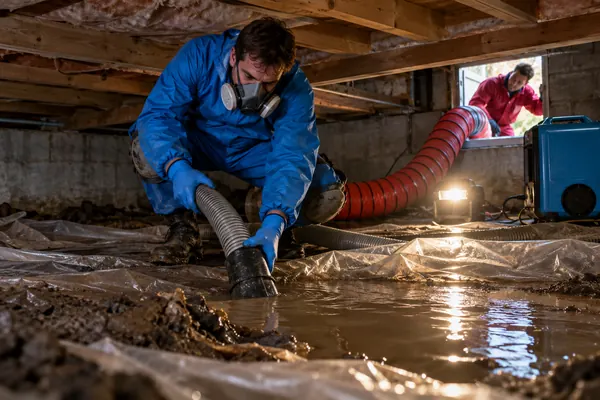
Pump down in stages
We lower water gradually. Pulling it out too fast can stress a wet foundation wall.
Sort belongings
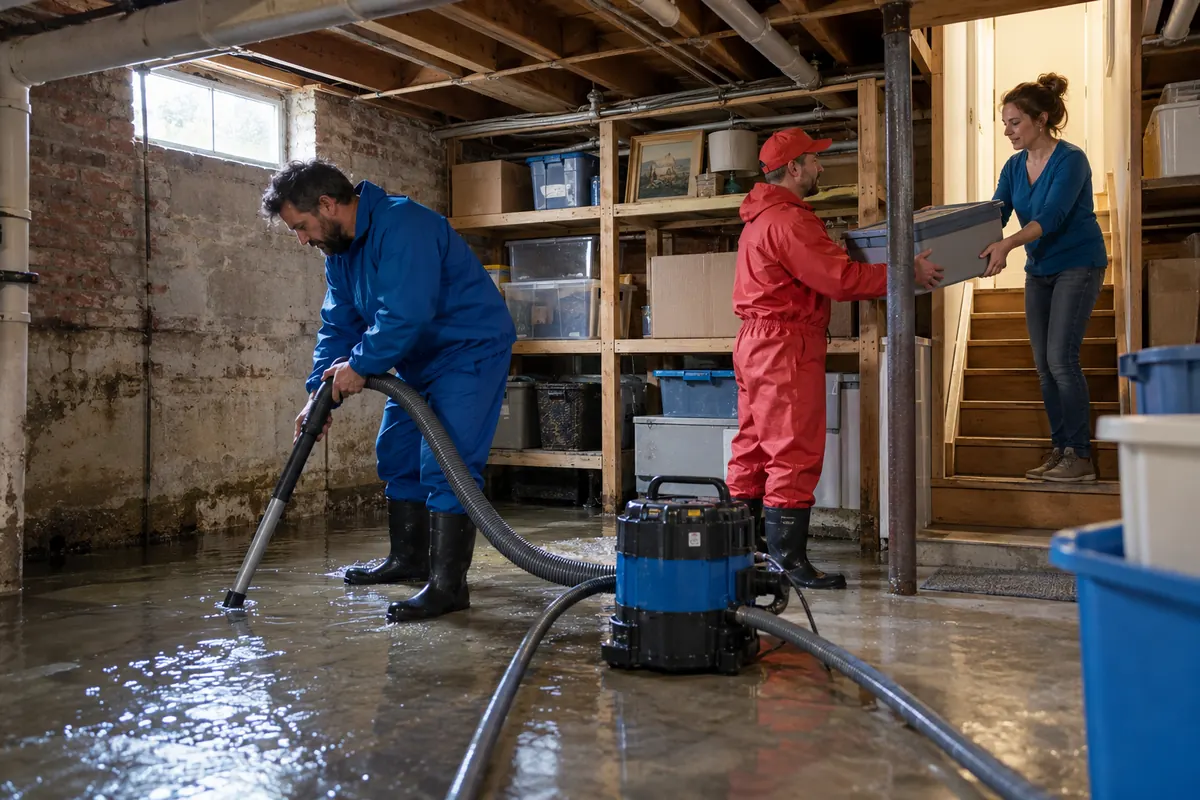
Boxes and furniture are sorted into save, dry and discard piles. Photos and papers are bagged for drying.
Remove wet materials
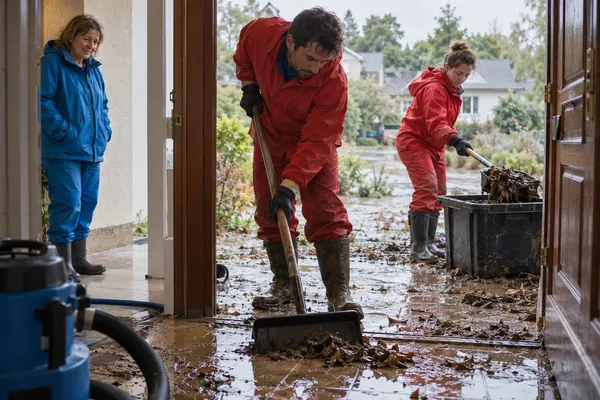
Soaked carpet, pad, insulation and bottom drywall are cut out and hauled away.
Clean and treat the floor
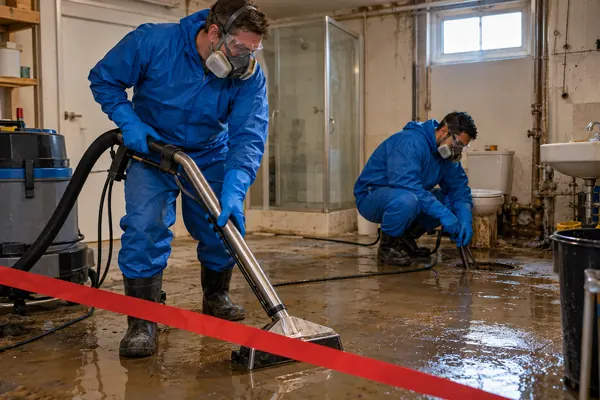
Concrete and block surfaces are washed and sanitized after the muck is out.
Dry the space
Dehumidifiers and air movers run until walls and slab read dry, with daily readings.
Usual basement problems
- Sump pumps that failed during the same storm
- Wet boxes of papers and photos
- Finished walls wicking water above the floor
- Floor drains that backed up with the flood
What to do before the crew gets there
- Stay out of the water if you cannot see the floor or the breaker panel is wet
- Turn off the water heater and furnace if the water is near them
- Move what you can from lower shelves to upstairs
- Photograph walls, floor and contents before cleanup
- Check your sump pump: is it running and is the discharge line clear?
What to watch for in a flooded lower level
Basement water shows up in a few ways:
- Dark water lines on concrete or block walls
- A floor drain that gurgles or backs up during rain
- Water coming through a wall crack or where the wall meets the floor
- Wet boxes, bowed shelving or rusted washer and dryer feet
- Paneling or drywall that wicks water above the floor line
Finished basements and what they hide
A finished basement adds layers: carpet over pad over slab, drywall over studs over insulation. Water gets into every one of them. When the water goes down, the walls can still be wet from the floor up to a foot or more.
We cut drywall a few inches above the visible water line, check the stud bays with a meter, and remove insulation that is wet. That leaves clean edges for a drywall contractor and lets the wall bays dry instead of growing mold behind fresh paint.
Basement cleanup cost range
Basement cleanup typically runs $1,500 to $6,000 as an estimate. Depth of water, finished walls and stored belongings all play in. Contaminated water adds protective gear and disposal. Call for an exact quote after we see it. See all price ranges.
Questions we hear about this
Can you save my stored belongings?
Some items, yes. Hard goods, plastic and dry-cleanable items often come through. Cardboard and soft goods are harder to save.
Is the water safe to touch?
Not always. Floodwater from outside can carry bacteria. We treat it as contaminated until proven otherwise.
Will the foundation be damaged?
Water alone does not usually crack a foundation, but pressure from wet soil can. Large cracks or bowing walls need a structural engineer.
Do I need a new sump pump?
That depends on its age and capacity. We note what we see and you can follow up with a plumber.
How long until the basement is dry?
Most take three to six days. Concrete holds water longer than wood.
Read next Wondering how the soil plays into it? Read about red clay and foundations.