Why it is so common here
More than half of Union City residents rent, and a lot of them live in garden-style complexes and townhomes. Units stack, plumbing runs through shared walls and ceilings, and one failed supply line or overflowing tub can reach several apartments.
Water that starts upstairs does not respect lease lines. It soaks the ceiling below, runs down wall cavities and into the unit next door. That makes timing and coordination as important as the drying itself.
What tenants and managers can do right away
- Tenants: report the leak in writing to the landlord and take dated photos
- Managers: shut off the water to the affected stack if you can find it
- Move furniture and electronics away from wet walls and ceilings
- Do not enter a unit with a bulging or dripping ceiling
- Keep a list of neighbors and units involved
- Check whether the tenant has renters insurance and who the carrier is
What complicates a rental building
- Tenants who cannot be reached
- A leak whose source unit is unclear
- Shared walls and ceilings that carry the water
- Disputes over who reported first
How we work in a multi-unit building
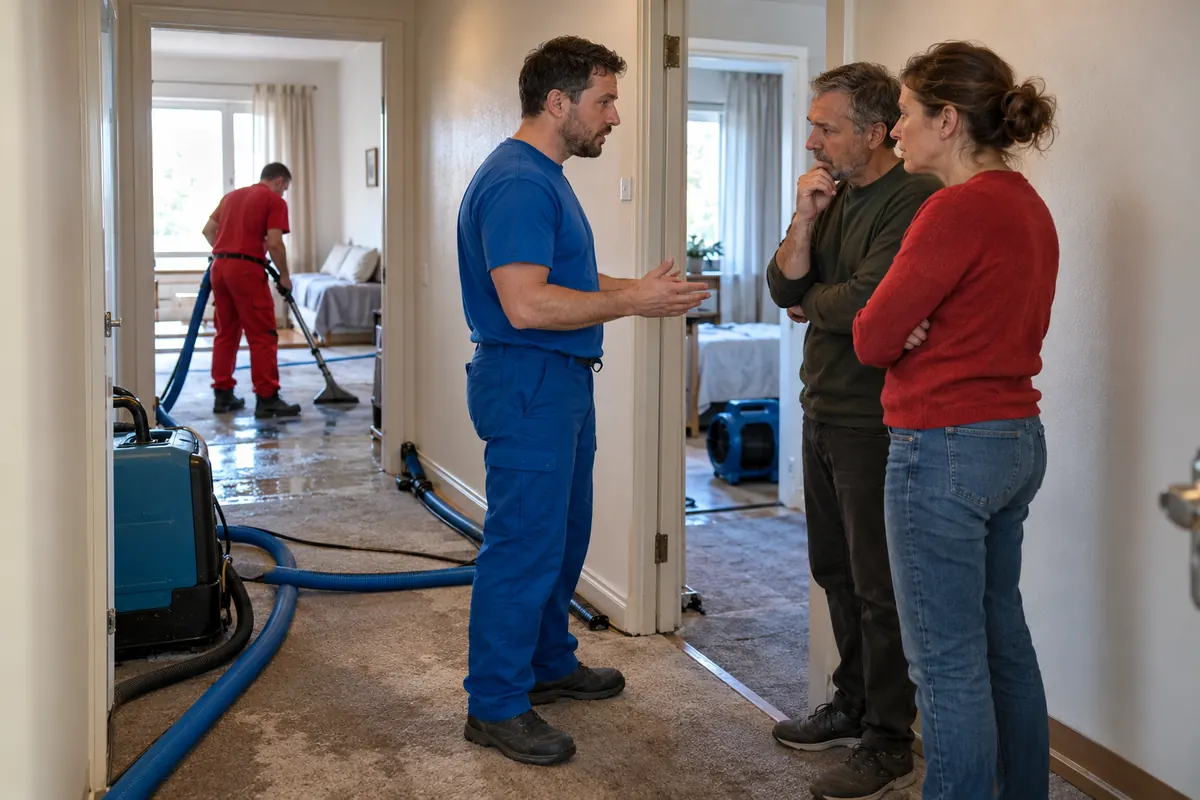
Talk to everyone involved
We check in with the property manager, the tenants affected and the tenant above if it is a known source.
Locate the water
We trace the source and mark each unit where water traveled.
Extract and protect
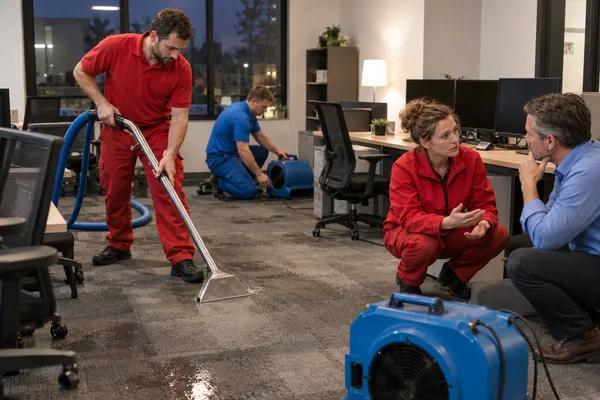
Standing water is removed, belongings are lifted, and common hallways are kept clear of cords and hoses.
Open and dry
Ceilings, wall bases and flooring are opened where needed and dried with equipment sized for each unit.
Share the documentation
Photos and moisture logs go to the manager and, if requested, to tenant renters insurance.
Coordinate repair handoff
Once dry, we give the manager a list of what is ready for drywall, flooring and paint.
How multi-unit leaks show up
In a building, you often see it before you find it:
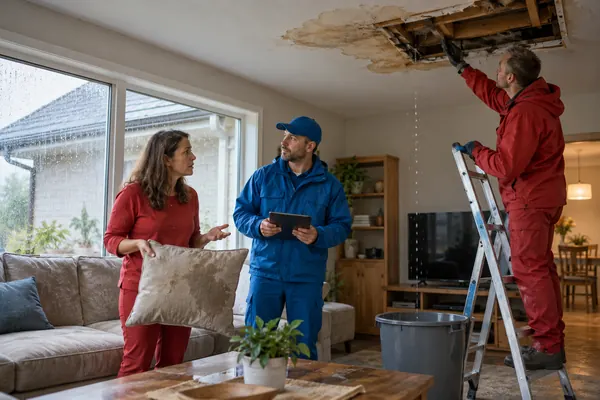
- A stain on your ceiling and nothing leaking on your side
- Water dripping from a vent, light or smoke detector
- Wet carpet along a shared wall
- Neighbors reporting the same thing in the same line of units
- Sound of running water in the wall after hours
Documenting for tenants, landlords and insurers
Three sets of paperwork usually matter: the tenant's renters policy, the landlord's building policy and the property manager's maintenance log. They each need something different.
We write down what was wet in each unit, the moisture readings by day, the equipment used and the date it was removed. Photos are labeled by room. That gives everyone the same record, which cuts down on arguments about who owes what.
Multi-unit job pricing
Multi-unit jobs often run $1,000 to $6,000 per unit as a typical estimate. Billing can be split by unit when several apartments are wet, and the property manager usually approves the work. Call for an exact quote. See all price ranges.
Questions we hear about this
Who pays for the cleanup, the tenant or the landlord?
It depends on the cause, the lease and Georgia law. Landlords usually handle building repairs. Tenant belongings fall under renters insurance.
Can you work in an occupied apartment?
Yes, when it is safe. We schedule around residents and explain what is happening each day.
What if the source is in another unit?
We trace the line with the manager and document it. Fixing the source is a plumbing task, and we handle the damage.
Should I stay in my unit?
If power is safe and there is no sewage or mold risk, many residents can stay. If not, we will tell you.
Do you work with property management companies?
Yes. We provide written scopes, logs and unit-by-unit status for managers and insurers.
Read next Tenant or landlord? Read what to do first after rental water damage.