Why Southeast storms flood our neighborhoods
A slow-moving thunderstorm or a tropical system pushing up from the Gulf can dump inches in an hour on this part of Fulton County. Stormwater systems built for lighter rain back up in streets and low yards.
Red clay does not soak up water the way sandy soil does. Rain runs off hard surfaces, pools at low spots and pushes against door thresholds and foundation walls. Homes near creeks, culverts and the I-85 and SR-138 drainage lines see it first.
What storm water leaves behind
Flood damage is more than wet floors:
- A line of mud and silt on walls, door frames and furniture legs
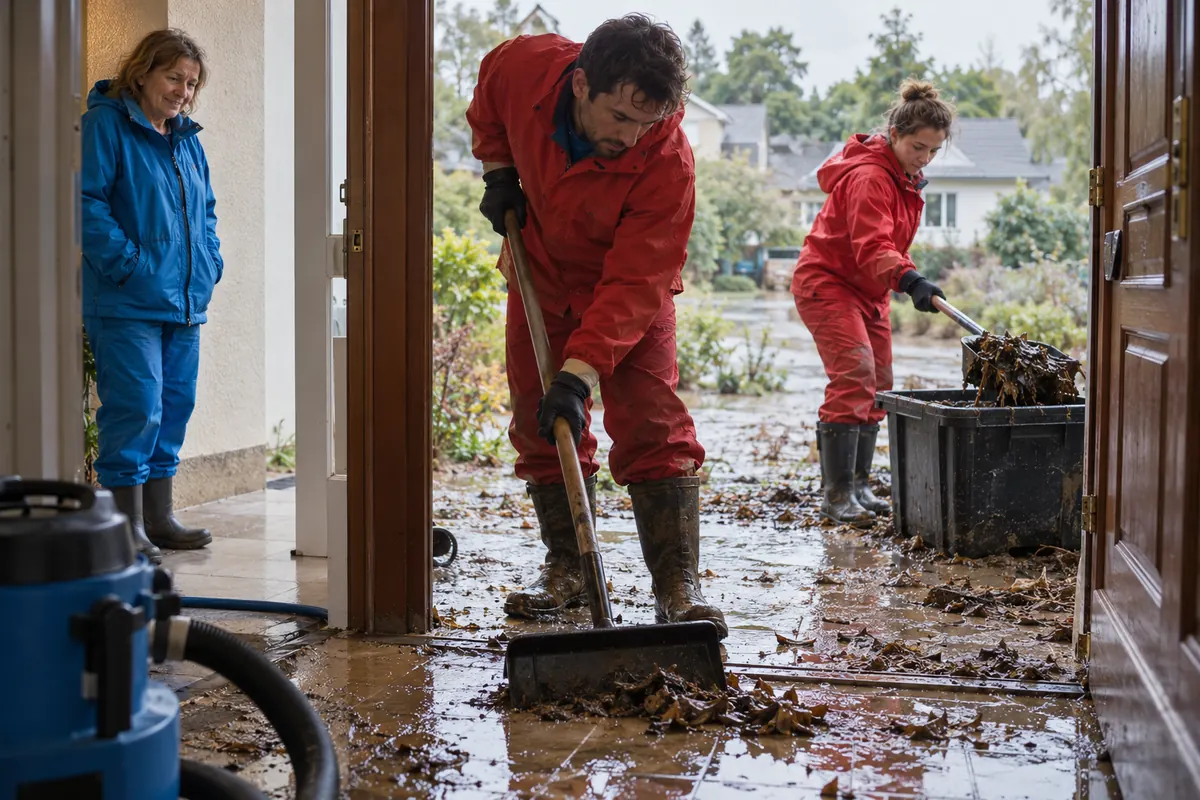
- Leaves, sticks and yard debris carried through doors
- Gray-brown water that smells like soil or sewer
- Warped doors and swollen cabinets after a few days
- Water that came in at the threshold and flowed under flooring
What a flood job brings
- Mud packed into door tracks and vents
- Carpet and pad that must all go
- Crews stretched thin after a big storm
- HVAC ductwork wet or silted
After a big storm, expect a wait and a long list
When a storm hits several neighborhoods, many people are calling at once. Tell us if anyone in the house is elderly, ill or without power, and if water is still rising. We take active flooding first.
Meanwhile, take photos, move belongings off the floor, and keep a list of what was wet. Your adjuster will want it, and it helps us decide what can be dried and what has to go.
Steps to take after the water recedes
- Stay out of any room with standing water if power is on
- Wear boots and gloves. Flood water is not clean
- Take wide and close photos of the water line in every room
- Throw out food that touched flood water
- Keep receipts for hotel stays or emergency purchases
- Do not use a regular vacuum or run the HVAC if it was flooded
Flood cleanup, in order
Assess the water
We treat flood water as contaminated and set protective gear and cleanup standards to match.
Clear mud and debris
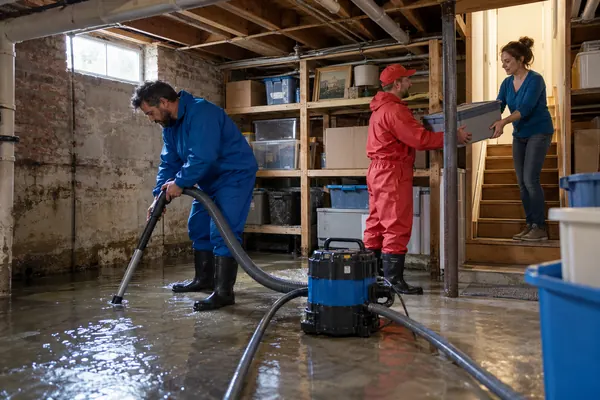
Shovels, buckets and wet vacs remove silt and yard waste from floors and entries.
Extract the water
Pumps and extractors clear standing water inside and under any raised floors we can reach.
Remove porous materials
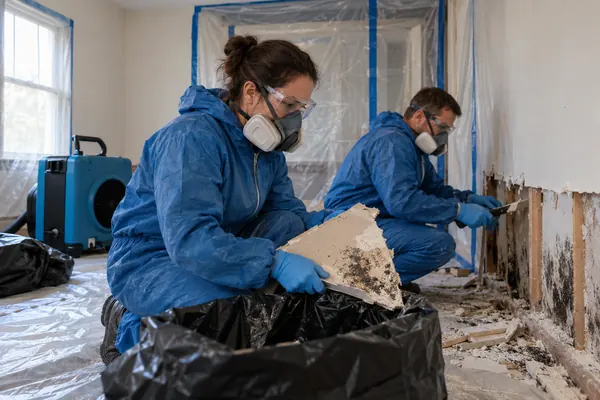
Carpet, pad, insulation and drywall that soaked up flood water are removed and bagged.
Wash and disinfect
Hard surfaces get washed, rinsed and treated with an antimicrobial cleaner.
Dry and monitor
Dehumidifiers and air movers run until wood, concrete and framing read dry.
Flood cleanup pricing
Storm and flood jobs often fall between $2,500 and $10,000 as typical estimates. Mud, contaminated water and heavy debris add labor and disposal. Large footprints go higher. A site visit is the only way to give an exact quote. See all price ranges.
Questions we hear about this
Is flood damage covered by homeowners insurance?
Typically not. Standard policies exclude flood from rising water, and it is covered by a separate flood policy. Wind-driven rain through a roof is different.
Why does flood water count as contaminated?
It picks up soil, fertilizer, pet waste and sometimes sewage on the way. It needs different treatment than a clean pipe leak.
Can I keep my drywall?
If flood water touched it, it usually has to be cut out. Water that stayed below the baseboard line is sometimes manageable.
How soon should mold prevention start?
Right away. In our humid climate, mold can begin on wet materials in a couple of days.
Do you handle yard debris?
We clear debris from entries and affected rooms. Larger yard cleanup is outside our scope.
Read next Check what your policy covers with our guide to water damage insurance in Georgia.