Why the first call matters more than people think
After more than 20 years of answering water damage calls around Union City, we can tell you that the first two minutes on the phone shape the whole job. The person on the other end is not just writing down your address. They are deciding how many people to send, which pumps to load, whether the truck needs protective suits, and how fast you need to be moving.
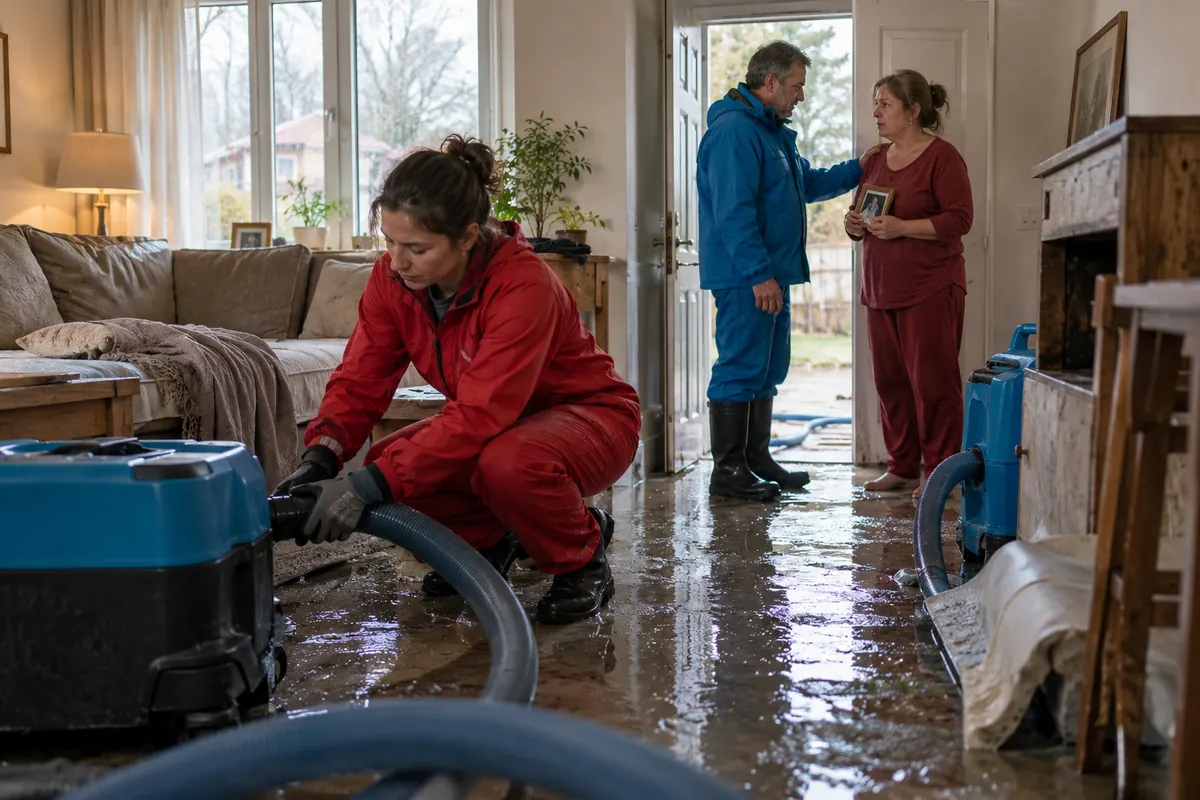
Most callers are stressed, standing in water, and trying to remember where the shutoff is. That is normal. You do not need to sound organized. You only need to answer a handful of plain questions honestly, and this post walks through them in the order we usually ask. If the water is still coming in right now, stop reading and call our emergency line. You can come back to this later.
Start with where the water came from
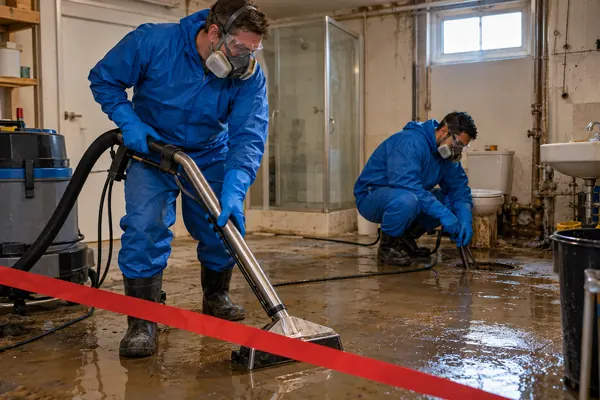
The source decides almost everything. A cracked supply line, a toilet that overflowed, a roof that let in rain and a sewer drain that backed up are four different jobs even if the floor looks the same. Clean supply water can often be dried in place. Water that came up through a floor drain or out of a toilet with waste in it has to be handled as contaminated, and we will bring different gear.
If you know the source, say it in your own words. If you do not, say that, and tell us what you saw. We hear things like the washer hose let go, the ceiling started dripping after the storm, or the tub ran over while someone was on the phone. Each of those tells us what to look for. If the water is dark, smells like a sewer or came from outside, say so right away, because that points to sewage backup cleanup or flood work, and we plan for it differently.
Tell us how much, how far and how long
Next we need a sense of scale. Ankle deep in a hallway is a very different call from a damp patch under a sink. Tell us which rooms are wet, whether the water crossed a doorway into a second room, and whether it ran through the floor to a lower level or a crawlspace. In Union City, where so many houses sit on slabs or over crawlspaces, water that disappears under the flooring edge is a real possibility, and we want to know about it.
Time matters just as much as volume. A floor that has been wet for an hour can often be saved with water extraction and a few days of drying. A floor that has been wet since last night, in July, is already starting to cup and smell. Do not play it down because you hope it is smaller than it looks. We have shown up to jobs described as a little water and found a soaked wall, and it costs everyone time when the first trip is planned for the wrong size of problem.
Describe what the water is sitting on
Flooring is the next question. Hardwood, engineered wood, laminate, vinyl plank, tile and carpet over pad all react differently, and the plan changes with each. Tell us if there is carpet pad, if the floor is glued to a slab, and if you can see the wall base swelling. If there is anything electrical low in the room, such as outlets, a furnace, or a water heater, say so, because we will ask you to stay clear and we may need to shut power to a circuit before anyone walks in.
Mention people, too. If someone in the house has asthma, a weak immune system, is pregnant, or relies on medical equipment that plugs in, it changes how we handle mold or contaminated water and what we ask you to do while we work. It also helps us tell you whether it is safe to stay in the house tonight.
Who else is involved in the job
Restoration touches more people than the person who called. If you rent, tell us who the landlord or property manager is and whether they know yet, because many apartment jobs stall until someone with authority approves the work. We cover this in more detail in our guide for tenants and landlords after a rental leak, and our apartment and multi-unit water damage page explains how we coordinate in a building.
If you own the house, tell us whether you have called your insurance company. You do not need a policy number to call us, but it speeds up paperwork if you have it handy. We cannot tell you what your insurer will pay, and nobody honest can, but we can keep photos, moisture readings and a written scope so the adjuster sees what we saw. Our post on homeowners insurance and water damage in Georgia explains how those claims usually go.
Questions worth asking us back
A phone call goes both ways. Ask whether the crew works at night and on weekends, who will be on site, and what they will measure to know the job is finished. A good crew answers that without hesitation: we read moisture in the walls, floors and framing every visit and take equipment out only when the numbers match a dry reference. Ask how the equipment is billed, and ask for the photos and moisture logs when the job is done. If you want a ballpark before anyone drives out, our pricing page lists typical ranges and the factors that move them, and we are always straight about what we can and cannot know before we see the water.
What happens right after you hang up
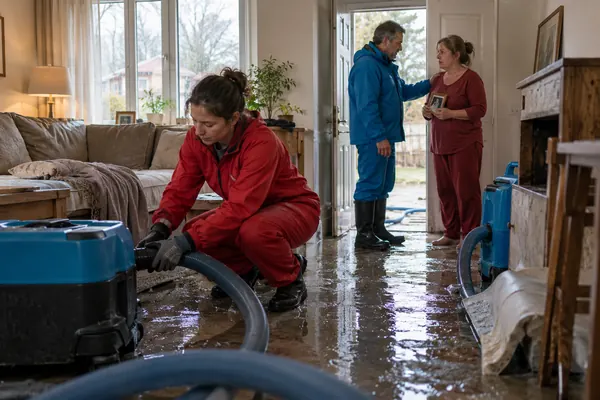
Once we know the basics, we will tell you what to do while the crew is on the way. Usually that means closing the main valve if you can reach it safely, staying out of water near electrical, lifting small items off wet floors and taking photos of everything before it moves. Then a crew heads to you with extraction gear and drying equipment sized to what you described.
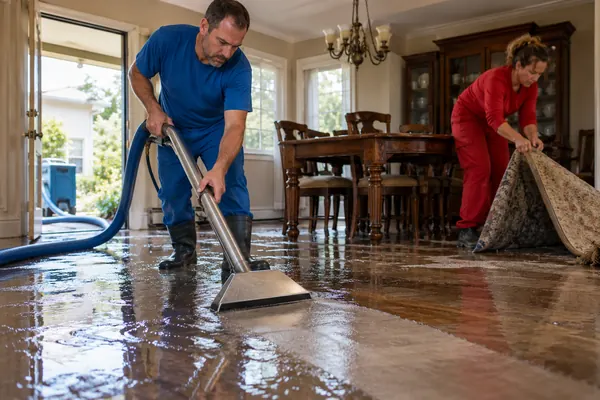
On arrival we look at the hazards first, find the source and begin pulling water. From there it becomes a drying job, and our structural drying and dehumidification crews take over with meters, air movers and dehumidifiers. If you already know what to say when you call, all of that starts faster.
Quick answers
Do I need my insurance information before calling?
No. Call first, stop the water, and sort out the policy details afterward. If you have your company name and policy number nearby, it saves a step later.
Should I send photos before the crew arrives?
Take them for your own records and for the adjuster. You do not have to send them first, but a few clear photos of the source and the wet rooms help us plan.
What if I am not sure the damage is serious?
Call and describe it. We will tell you honestly whether it needs a crew now or can wait for the next business day.