What red clay does to a house
Spend a few years crawling under houses in southern Fulton County and you stop being surprised by what you find. The soil is Piedmont red clay, fine-grained and packed tight, formed from rock that has been weathering for millions of years. Water moves through it very slowly. After a rain, sandy ground drains in a day or two, but clay stays slick and wet for much longer, and low spots near the foundation turn into small ponds.
That matters because of how clay behaves. It swells when it takes in water and shrinks and cracks when it dries. In a wet week it presses against foundation walls and holds water there. In a dry month it pulls away and opens gaps along footings and around pipes. Over a few seasons that movement can shift piers, crack block, and give water a new path into the crawlspace.
How water actually gets under the house
In our experience it is rarely one dramatic leak. It is a combination of small things that add up. The yard slopes toward the house instead of away. A downspout dumps at the corner of the foundation. A crack opens where the footing meets the wall, or a gap around the water line or the dryer vent lets in runoff. Then the clay holds the water against the wall until it finds the lowest way in.
The crawlspace itself works against you. Most older Union City houses have vents on every wall, and a dirt floor with a thin or torn vapor barrier. Ground moisture rises through that dirt all year. In winter it just makes the space damp. In summer, warm humid air blows in through the vents, hits the cooler floor and ducts, and condenses. You can have a crawlspace that was dry in March and dripping by August without a single big storm.
What it does to the rest of the house
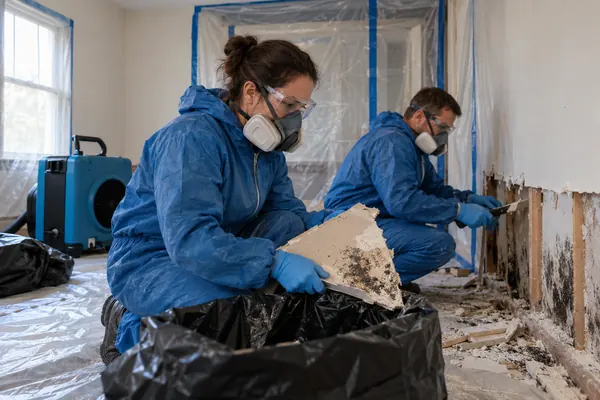
People rarely notice a wet crawlspace until the house tells them. A section of floor feels soft or bouncy. Doors begin sticking in summer. A musty smell rises through the registers when the HVAC kicks on. Insulation sags and falls. By the time we get a call, there is often mold on the underside of the subfloor and the joists have taken on enough water to swell.
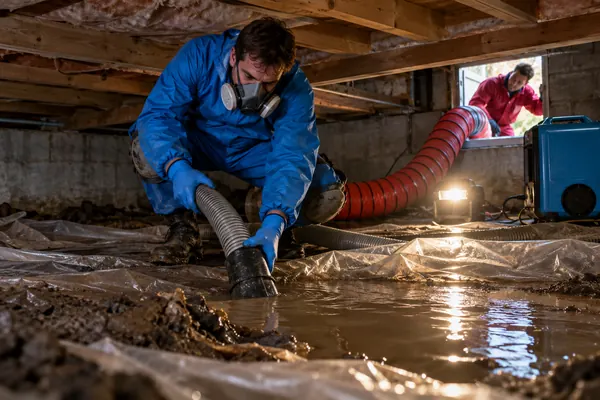
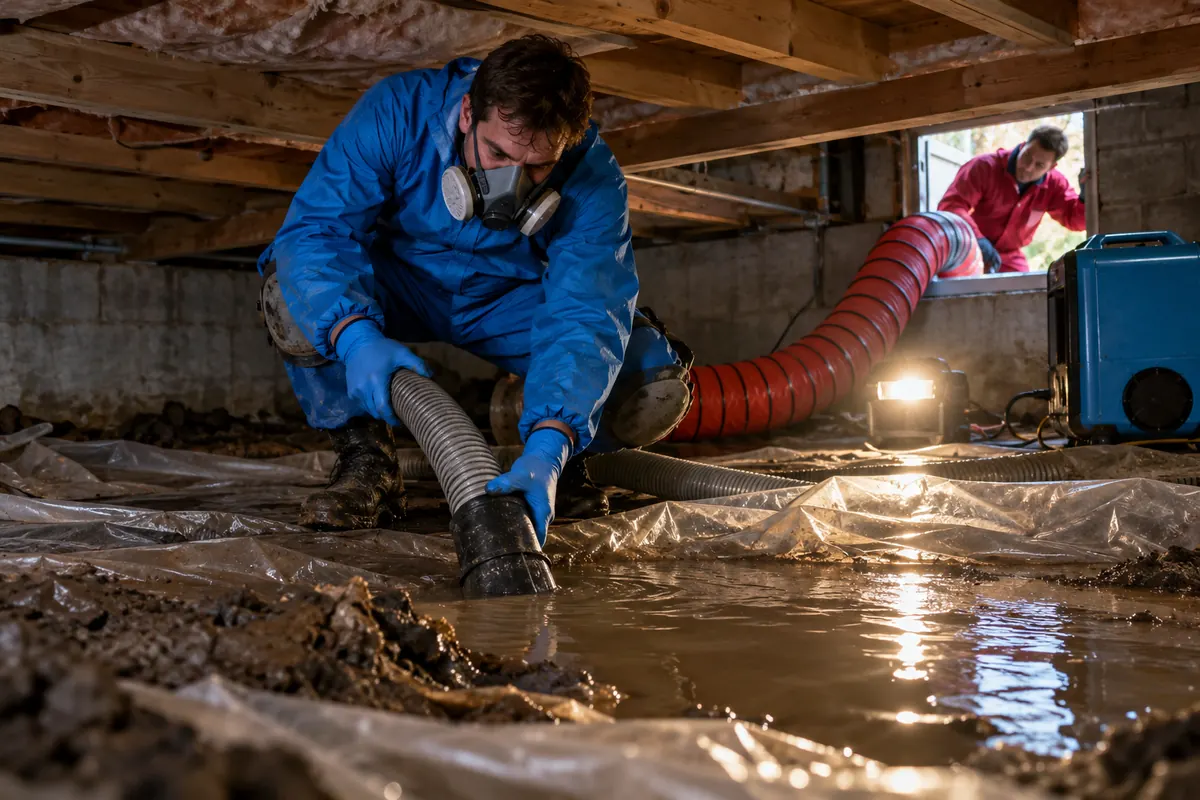
That is the point where it stops being a drainage issue and becomes a water damage job. We pump out standing water, remove the wet insulation and dry the framing with dehumidifiers and air movers. Our crawlspace water damage and drying page explains the process step by step. If mold has already started, our mold removal crew can contain and clean it, and our mold remediation service page covers how that works after a leak.
Crawlspaces, slabs and the odd basement
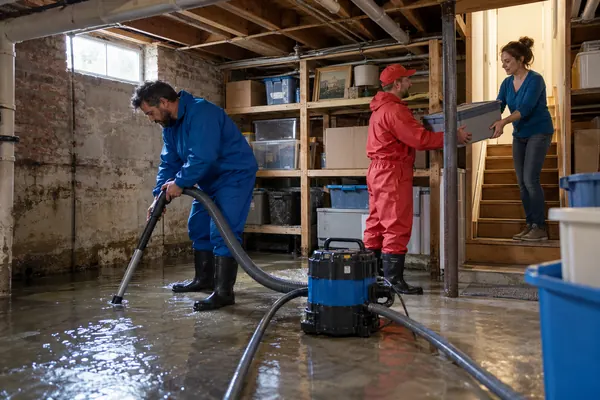
Most homes here are built on a slab or over a crawlspace. Full basements are less common, but they do exist, especially in older neighborhoods and on sloped lots, and they face the same clay. A slab house with a leaking line under the floor has its own set of problems, which we cover on our slab leak water damage repair page. If you do have a basement, the water comes in from the sides and bottom, and our basement flooding cleanup page walks through that.
The point is that the clay is the common thread. Whether the water ends up in a crawlspace, a basement or a slab house, it started in the yard, held against a wall, and found a way in. That is why cleaning up the water is never the whole fix.
What actually helps
We are not foundation contractors, so we stay in our lane, but we see what works and what does not. Start with the easy things. Clean your gutters and extend the downspouts at least six feet from the foundation. Regrade the soil so it slopes away from the house. Fix any crack or gap you can see. Those steps cost little and keep a lot of water out.
For crawlspaces that stay damp, ask a specialist about a proper vapor barrier, sealed vents and, in some cases, a drainage system or sump. Do not let anyone sell you a sump that dumps water at the foundation, because that just recycles the problem. Check under the house after every heavy rain for a few seasons so you learn what normal looks like for your property.
When to call us
If you find standing water, wet insulation, dark stains on the joists or a smell you cannot explain, call. We will pump out and dry the space, tell you where the water seems to be coming from and photograph what we find. If water arrived because of a freeze or a failed line, our frozen and burst pipe cleanup page may fit better, and our post on how to keep pipes from freezing can help you avoid a repeat. For typical costs, see our pricing page.
Quick answers
Is a damp crawlspace normal in Union City?
Some dampness is common, but standing water, wet insulation, soft floors or a musty smell are signs the space needs attention.
Should crawlspace vents be open or closed?
In humid Georgia summers, open vents can bring in moist air. Ask a crawlspace or foundation specialist before changing them, since the answer depends on the house.
Can you fix the drainage that causes it?
We pump and dry the space and point out where water seems to be coming from. Grading, drains and sump work are done by a drainage or foundation contractor.